
A Cartography of Justice-Involvement
A new framework to help professionals and clients navigate the landscape.
By Janeth Nuñez del Prado, LCSW | Desert Bloom Psychology & Consulting.
We Teach the Procedures. We Miss the Landscape.
There is a moment — and if you have worked with justice-involved people, you have witnessed it — when someone looks at you and asks a question that has nothing to do with their charge.
Where am I?
How did I get here?
How do I get through this?
They are telling you they are lost inside an experience that no one prepared them for — and they are quietly asking whether you are someone who knows this terrain. Whether you are willing to enter the landscape with them.
We are very good at teaching procedures.
For lawyers it is arraignment, bond, discovery, sentencing, appeals. For those of us working alongside them — psychologists, social workers, peer support workers — it is the biopsychosocial assessment, the treatment plan, the referral, the follow-up. We know the timelines, the terminology, the sequence. We have mapped the legal and clinical terrain with precision and care.
But there is another terrain — interior, psychological, relational — that runs alongside every case. And I have never seen a map for it.
The result is a particular kind of disorientation. When someone is caught inside a legal case, the system can tell them what will happen next to the file, but not what is happening right now to their life. The procedures move forward; the person feels suspended.
When We Are Lost
There is a common human response to landscapes that feel confusing, insurmountable, and unnavigable.
We look for maps.
Our ancestors drew maps to pass on what they had learned — to spare the next traveler from wandering aimlessly in terrain that had already been walked, suffered, survived. A map is accumulated wisdom made visible: someone was here before you, they made it through, and they left something to guide you.
Maps do three quiet but radical things at once: they tell us where we are, they show that more than one path exists, and they remind us we were never meant to cross dangerous ground alone.
You are here. Those three words, with a circled point on a map, can change the entire experience of being somewhere hard. The land stays the same, but we finally know where we are standing inside it.
Maps don't remove difficult terrain or danger. They help us prepare for it, orient to it, and move through it with intention rather than panic.
Over years of working alongside people involved in the justice system, I began to notice something. The names were different. The charges were different. The histories, the circumstances, the particulars of each life were entirely their own.
But the geography kept repeating.
Why We Need a Different Kind of Map
Every field of knowledge carries its own map — even when it doesn't call it that.
The legal system maps statutes, procedures, evidence, timelines. It is extraordinarily good at this. It can tell you exactly where a case stands, what comes next, what the rules require.
Those of us working alongside legal settings map something different. We map meaning, relationships, fear, shame, resilience, survival strategies that once kept us safe and now become the source of danger. We use the DSM to map patterns of symptoms — clusters of experience that have been named and studied and given language. We may even help a client recognize their own internal maps - the stories that tell them where they belong, what lands have been conquered, and where be dragons.
Neither map is wrong. Both are necessary. But when we are sitting with someone whose life has been altered by contact with the justice system, we begin to notice that something is missing from both of them. The legal map can tell you where the case is. The clinical map can tell you what the person is experiencing. Neither one tells you where the person is — inside the landscape, inside the experience, inside the particular geography of what it means to have this happen to this life - and what is needed at this point in the journey?
That question — what does this person need at this point in the journey, and what do helpers need to support them in surviving — is what sent me looking.
I tend to think in metaphors, in stories, nonlinearly. My immigration history and my home in New Mexico have taught me that we are not separate from the land. This map came to me in a dream. Since I have had it, my work with clients — and with myself — has become more coherent. My hope is that some part of it, or all of it, will help you find your footing too.
The Cartography of Justice-Involvement was born in that gap. It is not a diagnostic model; it does not sort people into categories or predict outcomes. It is an orientation tool. A way of standing in unfamiliar terrain and being able to say, with some steadiness: this is where I am. This is what surrounds me. This is what I am moving through.
It is not anti-DSM; it is anti-reduction. The DSM maps symptom patterns. The cartography maps lived experience — the felt, moment-to-moment reality of moving through a case, a life, and a landscape at the same time.
Every conceptual framework trains our attention. Diagnostic manuals teach us to look for criteria and clusters; legal frameworks teach us to track evidence and risk. This map invites a different set of questions: What does our map help us notice? What does it accidentally teach us to overlook? Where, on the actual ground of this person’s life, are we standing when we make decisions about them?
It was made for people impacted by the justice system.
Which, in one way or another, is all of us.
Introducing the Cartography of Justice-Involvement
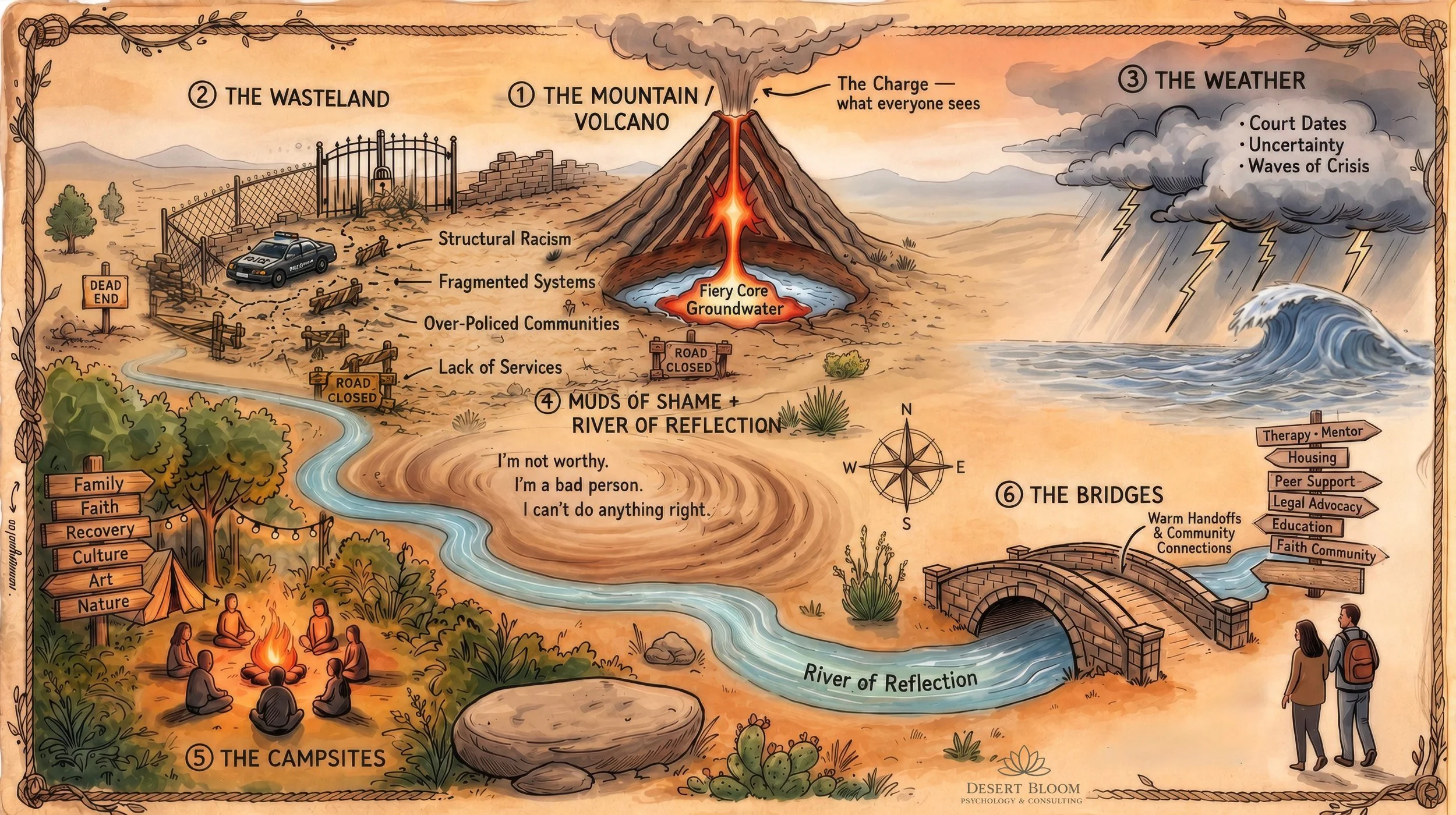
Conceptual Framework: Janeth Nuñez del Prado, LCSW
Illustration & Landscape Design: Ankush Singh
Before I explain a single piece of it — pause. Study it. Let your eyes move across the terrain without reaching yet for what any of it means.
This is not a map I designed at a desk. It emerged slowly, the way most true things do — through hundreds of conversations, hundreds of sessions, hundreds of moments of a client trusting me enough to tell me what they were actually feeling, and not only what had happened to them. Every place on this terrain was drawn because someone stood there first and described it to me, in their own words, long before I had a name for it.
You may recognize some of this terrain already. You may not know yet why.
That's alright. We're about to walk it together.
Come alongside me as I show you what I have seen. I'm curious what comes up for you as we move through it.
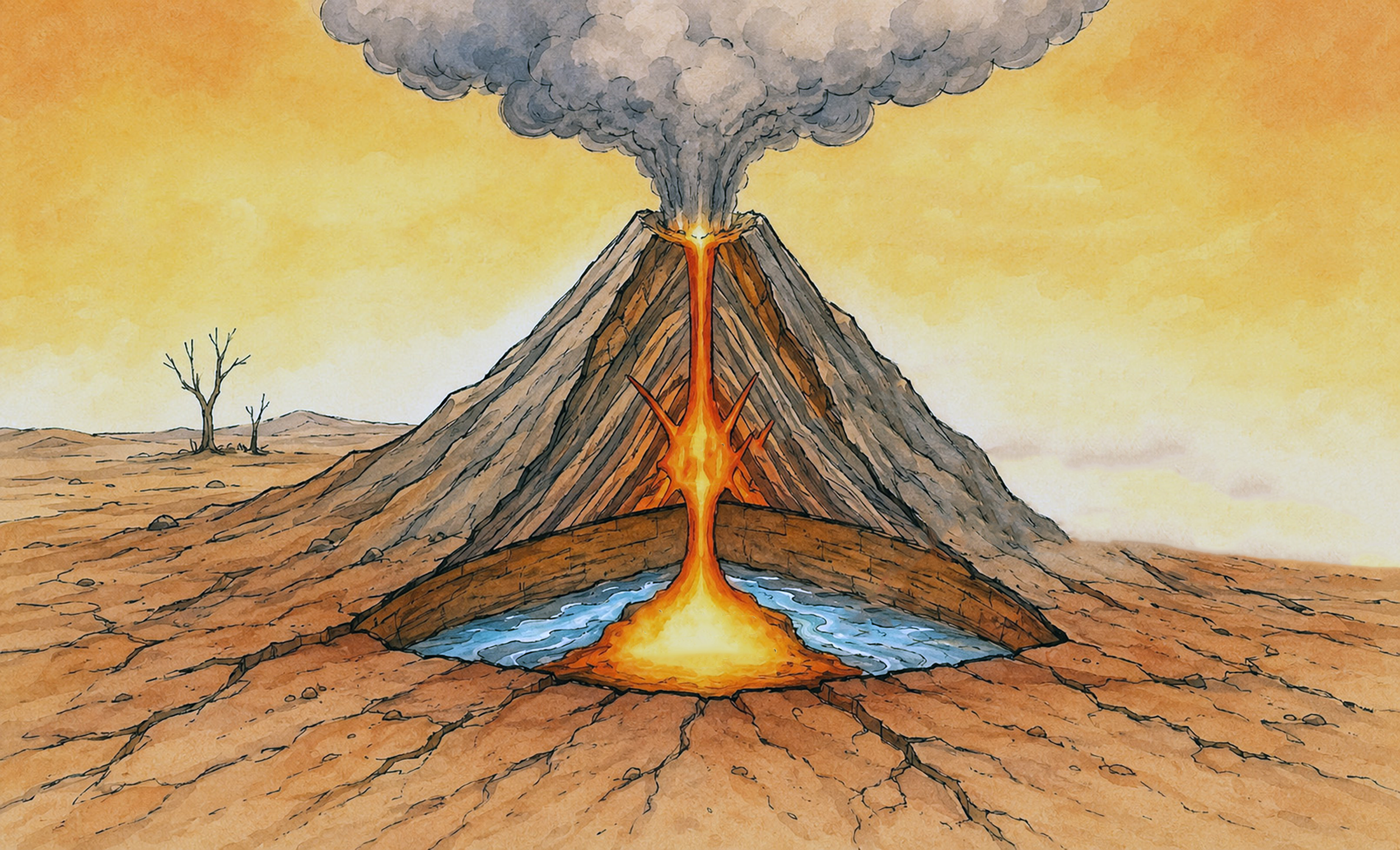
The Mountain/Volcano
This is the criminal charge. The violent episode. The eruption — years of accumulated pressure finally breaking the surface in a moment that becomes visible to everyone: the news, the court, the record that will follow a person long after the smoke clears.
The mountain is what we see first. It is often all many people see.
But a volcano is not only its eruption. The eruption is the event. What made it possible — what built the pressure, what cracked the surface, what determined how it would break and in which direction — exists far below what is visible from the outside.
What happens when we tend only to the eruption?
Geological Layers
The Fiery Core
The fiery core is what has been building underneath — sometimes for decades, more often than not, for generations.
Childhoods spent listening for footsteps. Learning before preschool that adults could become dangerous without warning. Intergenerational wounds that arrived before the person was old enough to choose them. The lack of a protective caregiver that erased paths that hadn't even been walked yet. Family violence that normalized danger as a condition of ordinary life. Attachment injuries so early and so thorough that the nervous system organized itself around threat before language existed to name it. Racism that taught someone, in a hundred small and large ways, what the world believed they were worth.
This is what has been burning underneath the mountain.
The eruption is visible. The fiery core is not. And one of the most common mistakes in working with justice-involved people is to respond to the eruption without ever asking what has been burning underneath it.
The Groundwater
But underneath the fiery core is the groundwater.
It is always there, even when no one has thought to look for it, even when years of eruption have made it feel unreachable. This is where you find resilience — not survival, not white-knuckling through, but the real thing. Experiences of fierce love. A moment in childhood when someone saw you fully and you felt, however briefly, completely held. Ancestral wisdom the body still carries.
The neighbor who fed you without being asked. The coach who saw something in you before you could see it yourself. The auntie who never raised her voice.
These are almost never the first thing anyone asks about. And learning to ask about them changes more than a clinical formulation — it changes the relationship. It tells someone: I refuse to believe the eruption is the most interesting thing about you.
You don't have to excavate the groundwater. But knowing it exists changes how you listen, what you notice, what you make room for.
I was working with a client I will call Tim. He had a serious violent charge and came into my office the way many people do when they have learned that the world is not safe and that anger is the most reliable form of protection — loud, defended, dominating the room before anyone could dominate it first.
Over time, I learned how he had come to be sitting on my couch. A history of chronic early trauma. A household where anger was the primary language spoken. He had not chosen this — he had learned it, the way children learn everything, by watching what the people around him did to survive.
I also learned about his auntie. He described her simply: "She never yelled." In a life where almost everyone had, she was the groundwater he had nearly forgotten was there.
I began to use the volcano metaphor with him — not as a diagnosis, as a map. His anger was not a character flaw. It was an eruption with a deep geological history. And underneath it, there was groundwater: the auntie who never yelled, his sense of humor, his commitment to working on his anger. Something worth reaching.
One day he came into session and said: "Janeth — a car cut me off on my way here and I felt the lava boiling. It almost erupted. But this time I caught it early. Instead of exploding, I took a minute. And I remembered that the explosion burns me too."
The map had given him something consequences and judgment never had: language. And with language came distance. And with distance came something that looked, for the first time, like choice.
He did not see red that day. He saw the mountain. He saw he was not the mountain — he was the person standing on it, deciding what to do next. The space we had created together had become part of his groundwater.
The Wasteland
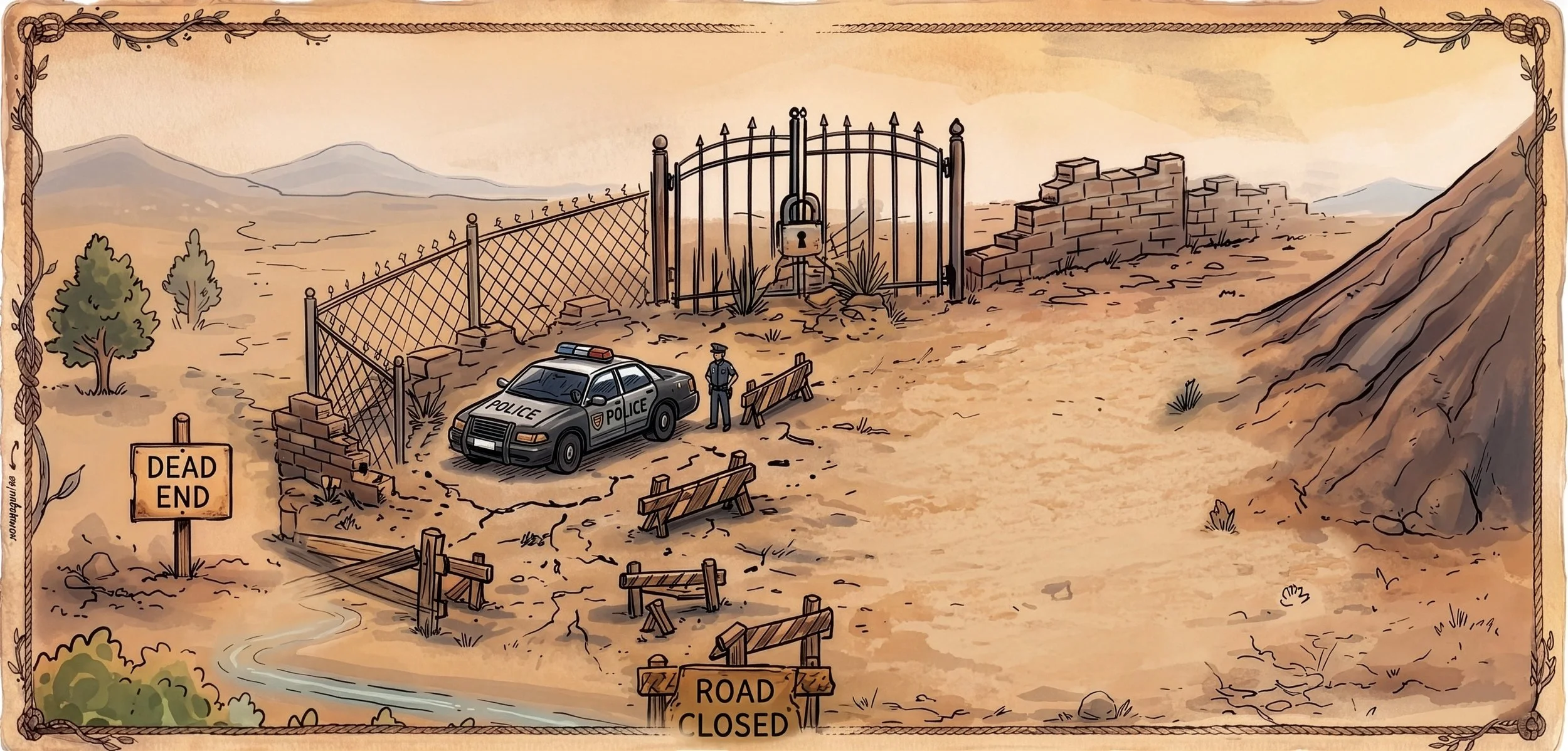
The wasteland is part of the terrain surrounding the mountain.
The barren land someone has been surviving — often for years, more often than not for generations — before anyone filed a single document or assigned a case number.
Fragmented behavioral health systems with no room left when someone finally found the courage to ask for help. Waitlists so long they were depressing to even get onto. Neighborhoods where police presence was constant, and simply existing there felt like a crime. Schools that suspended instead of supported. Emergency rooms that stabilized and discharged without asking what someone was going home to. Poverty that narrowed the road ahead so quietly and so completely that by the time someone is sitting in a courtroom, the idea of a different choice feels like a fantasy.
This is the wasteland. It existed before the eruption, and it will still be there long after the case is resolved — built by policy, by history, by decades of disinvestment in the communities most likely to end up inside the legal system. When a client tells me they tried to get help and couldn't, I do not hear an excuse. I hear someone describing the landscape accurately.
The wasteland also does something easy to miss if you aren't looking for it. It teaches people, over time, not to ask. Not to reach. Not to believe that reaching will bring anything but another closed door. By the time someone arrives at a public defender's office or a therapist's couch, they may have learned — from experience, not from "distorted thoughts" — that help is not reliably available, that systems aren't built for people like them, that asking is its own kind of humiliation.
A dismissal, a plea, even an acquittal does not repair this terrain. The same neighborhood, the same poverty, the same lack of services will be waiting when someone walks out of the courthouse. Which is why the work cannot begin and end with the legal outcome.
We can disagree about why the wasteland exists, how it should be addressed, who is responsible. That's not the point of naming it here. The point is that anyone working inside or alongside the justice system must reckon with the fact that it is real. It is not an excuse.
It is ecology. An ecology that depletes rather than nourishes, that creates risk instead of resilience, generation after generation — and cannot be ignored simply because it is inconvenient to name or depressing to see.
The Weather
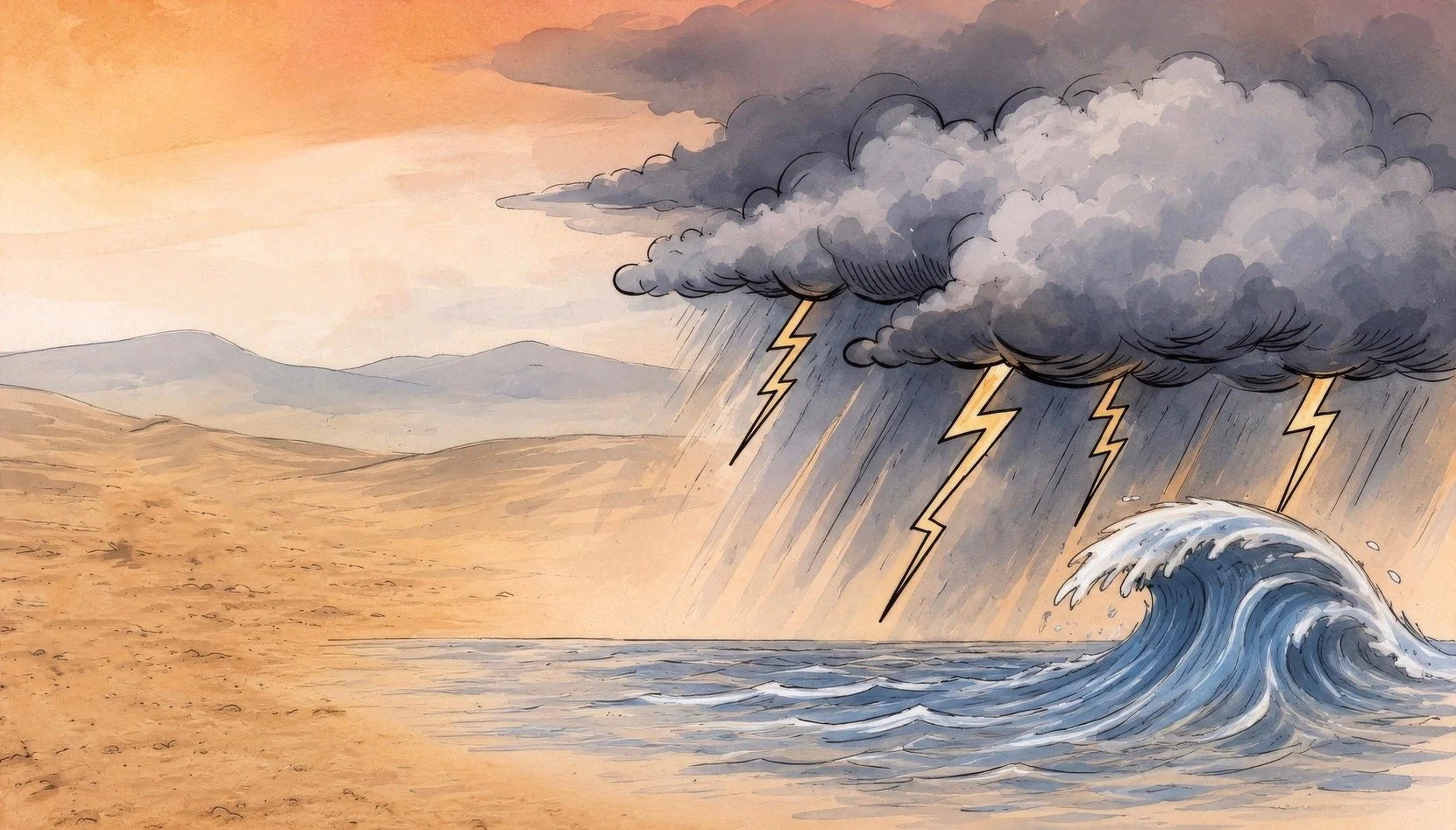
The weather changes day to day — unlike the geology underneath, which took years to form and will take just as long to dismantle.
I sat across from a client who had an upcoming court date that week. He needed to decide whether to take a plea or take his chances at trial. It was raining that day — the kind of New Mexico torrential downpour that arrives without warning, shakes the trees, and leaves the air smelling like wet sage. I had a cup of tea ready for him. He sat down and described feelings of overwhelm, anxiety, and a loss of control he could not quite name.
I looked out the large window in my office and said: It feels like the weather is reflecting how you feel inside.
He laughed and said, Storm clouds of impending doom.
Then he paused. And quietly, almost to himself, he said: The thing with storms is — they always end.
I added that when you are inside of them, it can feel like they will last forever. That the pressure, the uncertainty, the not-knowing can make a temporary condition feel like a permanent one.
He nodded. And through his lens of faith, he took a step back and put things into context. Yes, he could be facing very difficult things in his future. But there was still room for hope. Still a life worth living. His job in this moment was to stand in the storm without mistaking it for the rest of his life. My job in this moment was to offer him tea and let him know he does not have to ride it out alone.
Muds of Shame & River of Reflection
The Mud
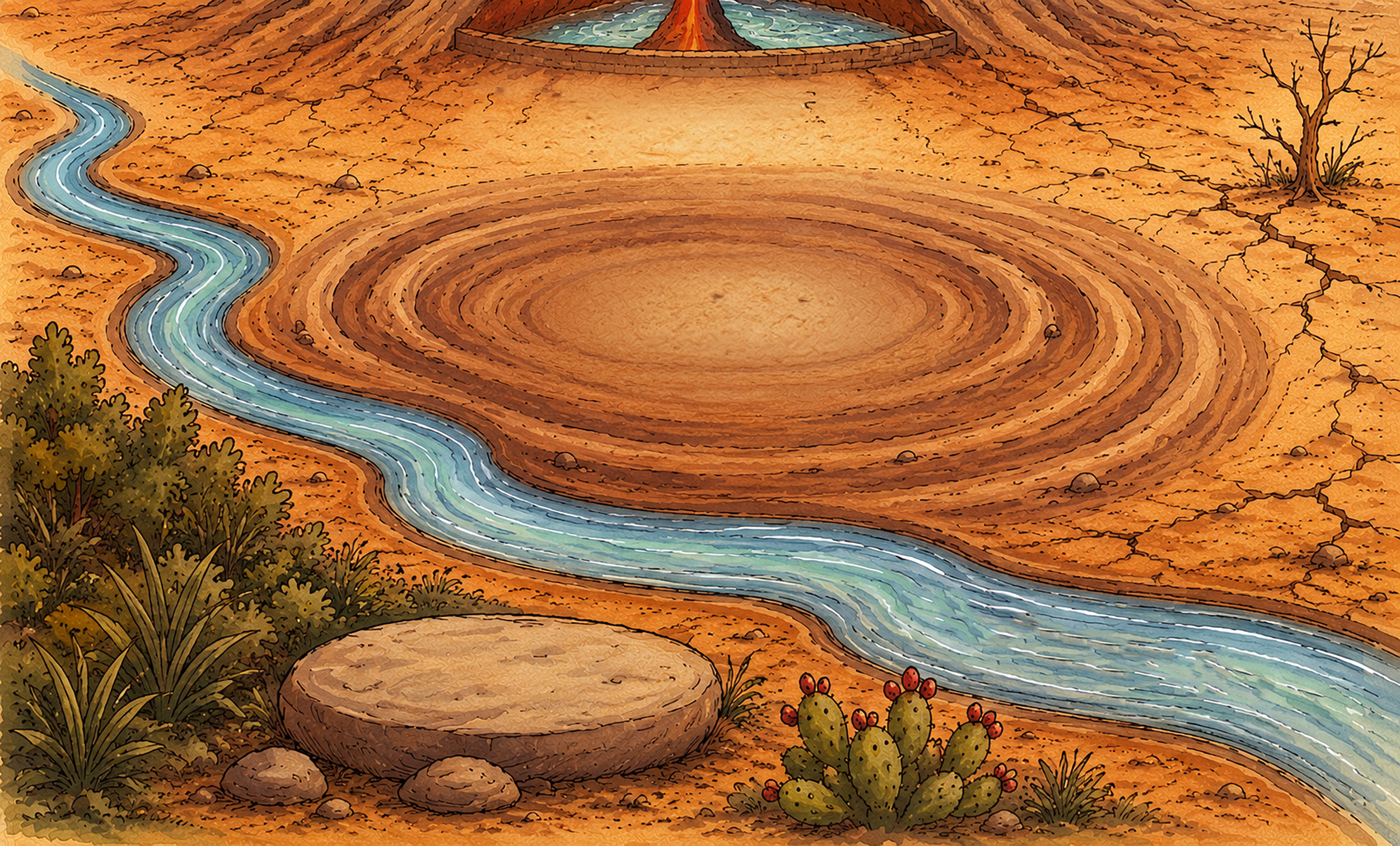
Not far from the mountain, the ground turns soft. This is the mud.
Shame lives here. And shame is not the same thing as guilt, though the two get confused constantly — including by the people standing in them. Guilt says: I did something bad. It points at behavior. It leaves the self intact, standing upright, able to look at what happened and consider what repair and accountability might look like.
Shame says something else. I am bad. It doesn't point at an action. It swallows the whole person. And once someone is standing in it, the ground gives way beneath every next step — because there is no repair for a self, only for a behavior. You cannot make amends for existing.
Left alone, mud doesn't just hold someone in place. It moves. When enough of it gives way at once, it becomes a mudslide — and a mudslide is never contained to the person standing in it. It comes down over everything downhill: the job, the marriage, the kids, the friendships that don't know how to hold this much collapse. Watch what shame actually produces when it isn't met with something steadier than itself, and it is rarely accountability. It is collapse, defensiveness, minimization, blame, despair.
A person using every bit of their energy just trying not to be buried can't spare any of it to look honestly at what they've done. The slide takes the whole hillside with it, and calls the wreckage justice.
This is what makes the mud so different from the mountain or the weather. The mountain erupts once, or perhaps sporadically. The weather changes day to day. The mud pulls the same person under, over and over, and when it finally lets go, it doesn't just fall — it radiates outward, and everyone standing downhill gets buried too.
And justice involvement is, among other things, a mud-making machine. The public nature of a charge — the mugshot, the label, the documentation that will outlive the case itself — does almost everything that deepens shame and almost nothing that offers a way out of it. Then comes the isolation no one names enough: a lawyer, rightly, tells a client not to speak about the case. Not to anyone. And the path out of shame runs through speaking it in relationships where it is met with a nonjudgmental stance, empathy, and compassion. So the very advice that protects someone legally is the same advice that leaves the shame undisturbed, and the hillside unstable.
For many, the mud isn't new terrain. It's old terrain, revisited. A charge rarely arrives into a self that started the day intact. More often it lands in a wound that was already there — an old, early-learned belief that says I must deserve this, formed long before any charge existed to confirm it. The system doesn't create the mud in that case. It just adds new sediment to ground that was already soft, already prone to giving way.
The River of Reflection
But the mud is never the whole landscape. Beside it — always, whether anyone can see it yet or not — runs the river.
This is the river of reflection. Movement, where the mud only pulls. And a river doesn't stay a river without banks. Without them, water doesn't carry anything anywhere — it just spreads, shapeless, taking the whole hillside down with it. The banks are what hold the current to a direction. And they're also where a person can stand to look at what the water is carrying, without being swept into it themselves.
Accountability lives on the banks, not in the mud. Shame floods the hillside; accountability requires stable ground, where looking at yourself doesn’t feel like drowning.
One of the quieter parts of this work is helping someone find their bank before they can find the river itself — because from inside the mud, a bank can be hard to imagine. Everything, from in there, still looks like more mud.
I sat with a client once who would not look at me when she said it. "Anytime I enjoy something, I feel guilty. Because I don't deserve to be happy." And then, quieter: the documentation called her a serious violent felon. The act that brought her into our office did not define her character. But if that was how the system saw her — maybe it was true.
I didn't answer right away. Some things deserve to be held before they're responded to.
What I could offer her wasn't an argument against the documentation. It was a relationship in which she could be seen without it — no case number, no label, just a woman across from me who was allowed, in that room, to be seen as more than a charge. That was a bank. Solid enough that she could finally stand somewhere and look at the water instead of being pulled under by it.
The system gets to name what it thinks happened. It never gets to name who someone is. That distinction — small on paper, enormous in a life — is often the first bank a person finds to stand on again.
The Campsites
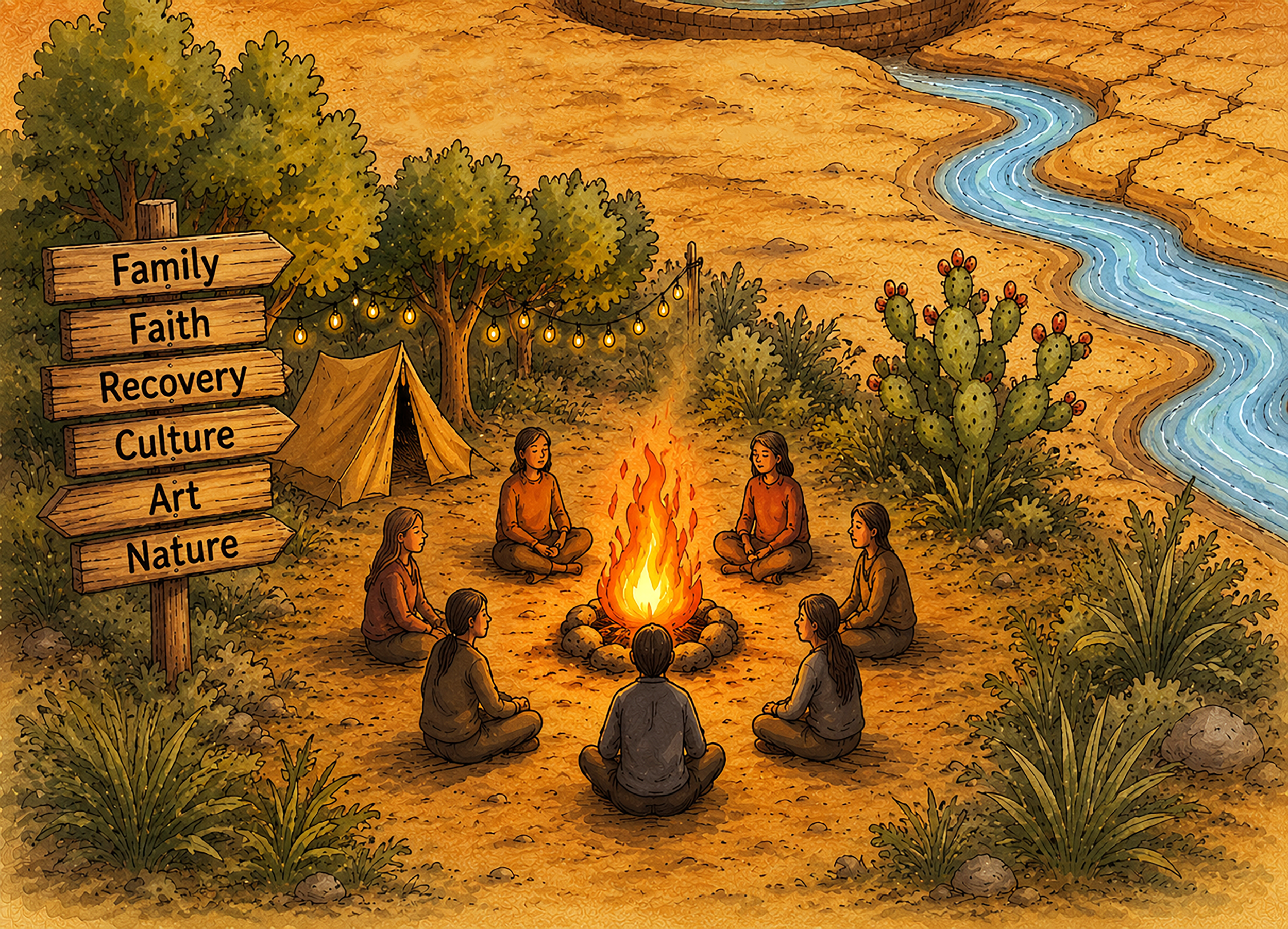
Luckily, the map is not only covered with danger, the map has pockets of peace. Places for rest.
A campsite is a small, repeatable thing that signals continuity — proof that life is still happening even when everything around it feels like it's coming apart. The morning coffee. The same meal every Sunday. A walk at the same hour each day, whether or not anything good happened that day. These are not expensive, luxurious, or dramatic. They are ordinary. And their ordinariness is exactly what makes them load-bearing.
When someone is moving through a legal case that won't resolve — through months, sometimes years, of not knowing — time stops behaving normally. The nervous system loses its rhythm. A single unresolved point expands to fill the whole horizon. Campsites are what push back against that. They are evidence, repeated daily, that a life is still underway alongside it.
But there's a distinction worth naming, because it's easy to miss: there's a difference between keeping a campsite and actually being in it. I have sat with clients who kept every routine intact — work, meals, the school pickup — and were, underneath all of it, barely there. Moving through the motions without being in them. The campsite was standing. They just weren't camped in it.
I said earlier that this map was made for all of us — that in one way or another, we all stand somewhere on this terrain. I am not only the one describing the campsites. I have needed them.
In the hardest seasons I have lived through, I kept running the same path along the bosque that I'd always run. The path was there. I was not — not really. I ran with my eyes straight ahead, getting through the mile, not taking in a single cottonwood. And then, one morning, months into it, I looked up and saw hot air balloons drifting over the city, the way they always do here in the fall. My first thought was that there seemed to be more of them than usual. Then I realized: there weren't more balloons. They'd been there the whole time. I had just stopped looking at the sky.
That's what a campsite offers a person navigating justice involvement — not a cure, not an ending to the case, but a portal back into their own life while the case is still unresolved. A daughter's laugh. A church pew that's always felt like it belonged to you. A grandmother's kitchen. Soccer practice on Tuesdays. The specific quality of desert light pouring through the window in the morning. None of these move the case forward by a single day. All of them keep a person tethered to who they are while it grinds on.
And there can be a guilt that shows up here, worth naming directly: the sense that enjoying anything while a case is pending is a betrayal — of the seriousness of the situation, of the harm caused, of what's at stake. As if staying braced for disaster were its own form of protection. As if bracing has ever once changed an outcome, or made one easier to bear when it came.
It isn't. A campsite is not evidence that someone isn't taking their circumstances seriously enough.
It's evidence that they are still here. Which, especially in the middle of the wasteland and the mud, is not a small thing. It is the thing that makes surviving the rest of the terrain possible at all.
The Bridges
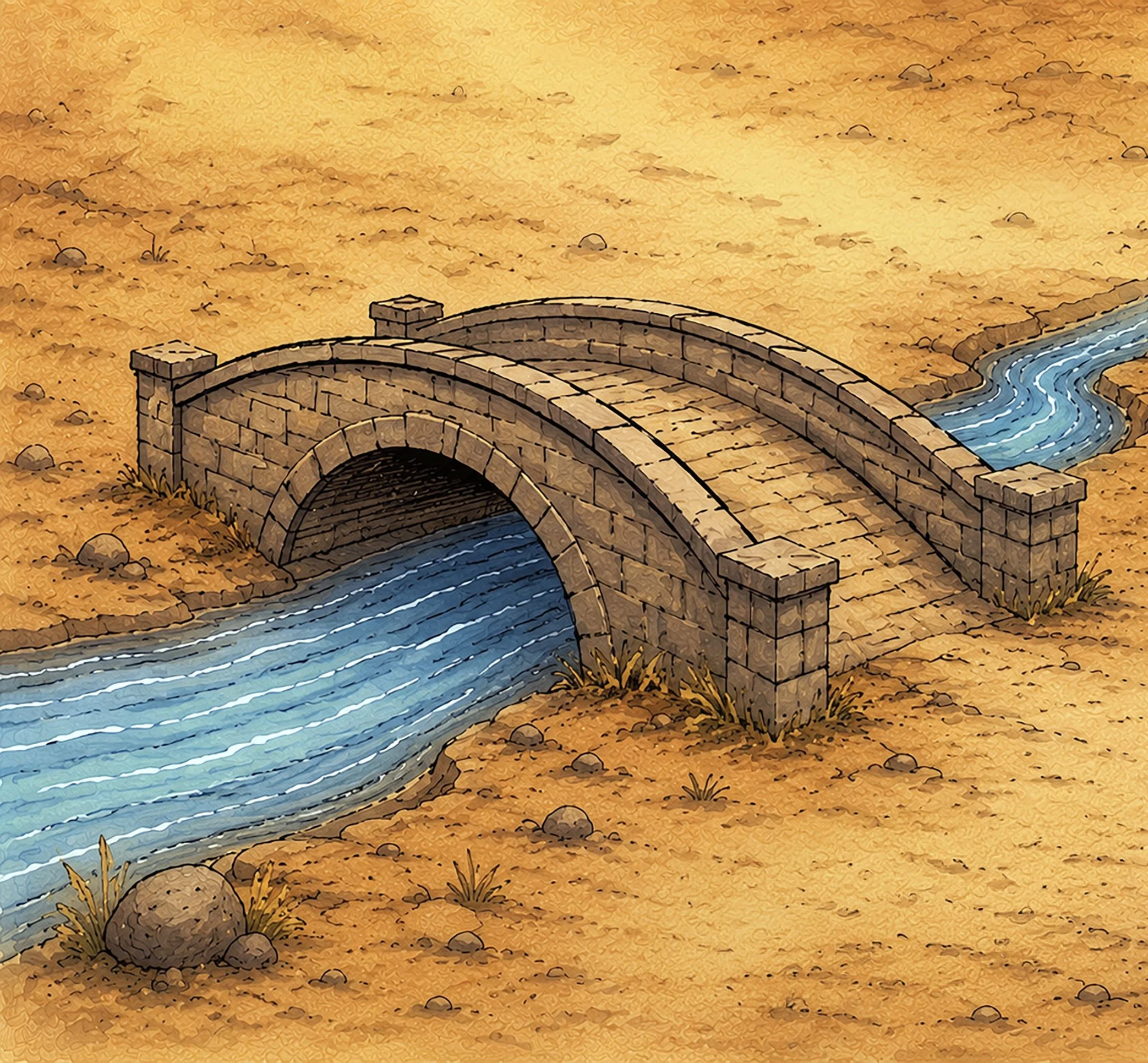
A bridge is not something you build the day you need to cross.
This is where relationships live on the map — not the deep, declared relationships necessarily, but often something quieter. Sociologists call these weak ties: the gym friend, the neighbor who waves every morning, the mentor who checks in twice a year. The name undersells them badly. A weak tie is not a lesser relationship. It is a thread in the fabric that keeps a person from unraveling, and on this terrain, threads matter enormously, because so much of what surrounds a justice-involved person has already frayed.
I think of a client's public defender who remembered, session after session, small details of his life that had nothing to do with the case — his daughter's name, the job he was trying to get back to. That's a bridge. I think of a probation officer who says good morning like they mean it. A pastor who doesn't ask what happened before asking how someone is doing. A mentorship program that existed in the neighborhood long before anyone needed it, because someone built it in advance, without knowing whose life it would eventually hold.
That's the part of bridges that's easy to miss: a bridge only works because it was built before it was needed. No one constructs a bridge in the middle of the flood. The public defender's warmth, the pastor's steadiness, the mentor's presence — none of it appeared because of the case. It was there already, quietly, and the case is simply what revealed how much weight it had been holding all along.
This is also where a warm handoff belongs — one person walking another person partway across, staying present until the next person is actually there to receive them, rather than pointing at a bridge from a distance and calling it access. In embedded social work, this is not an administrative task. It's a clinical one. The handoff is often the difference between someone reaching a resource and someone quietly deciding, once again, that reaching doesn't work.
Bridges don't erase the mountain, the wasteland, or the mud. They don't repair the geology or change the weather. What they do is smaller and, in its own way, larger: they mean no one has to cross the whole landscape alone. And for someone who has spent a long time learning that no one is coming — that help arrives late, if at all — a bridge that was simply, quietly there when they finally reached for it can do something the legal outcome itself cannot. It can teach them, again, that reaching is not always humiliation. Sometimes it is met.
What Changes Once You Have the Map?
What changes, once you have the map?
Everything.
Clients begin locating themselves.
I think of a woman who came into session describing her anxiety the way people often do when they have no language for it — as a formless, private catastrophe, evidence that something was wrong with her specifically. When we walked the terrain together, she went quiet for a moment. Then she said: You made this map because I’m not the only one who has felt this way.
That is what the map gives first. Relief from the belief that the terrain was hers alone. What was once unnamed and overwhelming becomes nameable. What was nameable becomes something she can hand to another person without shame attached to the handing.
And the map changes the professional standing across from her, too — not just the client sitting in the chair.
A client rebuffs every attempt at connection, every carefully built suggestion for how to move forward. Before the map, the read is simple: this client is resistant. With the map, the question changes shape. I wonder if she's standing alone in the mud of shame. What would it take for me to be the river instead of one more voice asking her to explain herself?
A client stops showing up to session. Before the map: she's not engaged. She's not ready. With the map: I wonder what's keeping her from the road — a bus route that doesn't run on time, a job that can't spare the hour, a system that has taught her, correctly, that asking for help rarely gets returned. That's the wasteland, doing what the wasteland does.
And sometimes there's no wondering required at all. A client says, simply, that life has gone thin — that nothing holds the way it used to. There, the map doesn't ask a question. It points. Where have her campsites gone? What bridges has she lost, or never had?
This is the real shift, underneath all three: a new place to stand while looking at what was already there. The client was never resistant, absent, or thin. She was locating somewhere on a landscape that had a name, whether or not anyone had taught it to her yet.
We move from a lens of pathology to a lens of geography.
We zoom out. And what comes into view is not a diagnosis. Not a trial strategy. Not a case file.
It's a map.
Different People Stand in Different Places
No two people standing in this map are looking at the same ground.
The attorney sees the mountain — the charge, the record, the thing that is creating the most risk in their clients’ lives. The therapist hears the geology, the pressure that built for years before it ever reached the surface. The probation officer tracks the weather, day to day, missed check-in to missed check-in. The family protects the campsite, the ordinary life still trying to hold its shape around all of this. The client feels stuck in the mud, certain the ground beneath them is the whole world. The judge, from the bench, may never see the groundwater at all.
No one is wrong. They are simply standing in different places on the same terrain, describing what's in front of them as if it were the whole landscape.
The map doesn't correct anyone's view. It lets everyone orient together — around the same mountain, the same mud, the same ground.
One Way I Use This Map
I have held off naming this until now, intentionally.
Because the map came first and guided the work. And I want you to know the terrain before I tell you what I built on top of it.
I do embedded psycholegal social work — a clinician working inside a criminal defense and civil rights law firm, sitting alongside attorneys as they build cases for the people they represent. It is one way of applying this map. It is the ground I have tested this on and the organizing framework that keeps my work ethical, effective, and human.
The map is what tells me where to stand in any given session, with any given client, on any given day.
It tells me where to listen — not just to the charge, but to the geology underneath it. It tells me what not to rush — that a client standing in the mud cannot be talked out of shame any faster than a river can be told to carry someone before it has banks. It tells me when to stabilize the weather, and when the weather isn't the real problem, when what's actually needed is space for reflection instead. It tells me when to build a bridge — a warm handoff to a resource, a name and a phone number instead of a pamphlet — and when to simply help someone find their campsite, because sometimes the most clinical thing I can do is ask about their kids, their coffee, their Sunday.
This is what clinical work looks like once you can see the whole landscape instead of only the piece directly in front of you. The map is what keeps me from being overwhelmed and paralyzed by the totality of the circumstances that led them to our office. It keeps me from becoming one more system that couldn't hold them.
An Invitation
You do not have to be involved in the justice system to recognize this landscape.
We have all known the mud, even if no charge ever named it. We have all been overwhelmed by weather we didn't choose and couldn't control.
If we are lucky, we have found a campsite, a bridge, and someone who showed up before we asked them to. We all have our ordinary anchors. Most of us never called them that until now.
This map was drawn for people navigating justice involvement specifically. That terrain is often the least named, the least mapped — the most likely to be walked alone. But the terrain itself is not theirs exclusively. It is simply more visible there. More public. More consequential when the ground gives way.
Every map is, underneath everything else, a radical act of hope.
It assumes there is somewhere worth arriving. It assumes difficult terrain can be understood rather than only endured. It assumes none of us were meant to cross the hardest ground alone — that somewhere, someone has walked this before, and left something behind for the next traveler.
There are not only dragons.
There are also helpers and healers, and sources of resilience that were with us long before we had a map to find them on.
The Cartography of Justice-Involvement is one attempt to name a landscape that has always been there, long before anyone thought to draw it.
I hope it helps you find your footing.
I hope it helps you find each other within it.
A Final Note of Gratitude
This map did not begin at a desk. It began in a dream, and it was built, piece by piece, by the people who trusted me enough to describe their terrain honestly.
To every client whose words appear here in disguise: thank you. Thank you for letting me borrow your language—the lava, the auntie who never yelled, the storm that always ends, the bank you found when you had nowhere else to stand. This map exists because you were willing to name what you were walking through, long before either of us had a word for it.
Every map requires both a cartographer and an artist. My deepest thanks to Ankush Singh, whose remarkable talent gave this landscape its visual form. His illustrations transformed an internal geography into a place others could enter. This map is richer because of his imagination, generosity, and creative partnership.
I am also grateful to the many people whose wisdom lives beneath this terrain.
To my mentors—Alicia Lieberman, Patricia Van Horn, and Chandra Ghosh-Ippen—who taught me to look for the groundwater, not just the fiery core. To my ancestors, my grandmothers and grandfathers, my parents, and those I have loved and lost, whose presence still moves through this work. To the attorneys and advocates I sit alongside every day, who are walking this same landscape from a different vantage point, and who have taught me that no one crosses it alone.
To my husband, Max, and to my children, Lily and Rio: thank you for being my own campsites and bridges, again and again. Thank you for shaping the way I see and experience the world—through metaphors, stories, and always a bit of magic.
This work asks a great deal. It asks you to see the wastelands, the fiery core, and not look away. But it also lets you witness what survives there—the groundwater, the river beside the mud, the small fires people build to keep themselves warm.
I do not walk this terrain alone, and neither should anyone else.
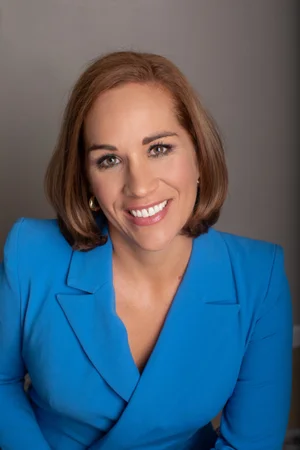
Trained in trauma-informed and attachment-based care, Janeth brings a practitioner’s understanding of what it actually costs to do this work well—and what makes it sustainable. She consults with legal teams on reflective practice, vicarious trauma, and the internal awareness that keeps good advocates effective over the long run, not just in the moment.
She believes the people doing the hardest work deserve the same depth of care they offer everyone else.
This piece is intended for informational purposes and is not a substitute for individualized mental health care. Clients have been de-identified to protect confidentiality.
Stay with the conversation
If this piece resonated with you, subscribe to Desert Bloom Reflections for essays on healing and clinical practice, along with updates about upcoming trainings.