The Dinner Table: On Feeding What We Want to Grow
Rumi said to welcome every emotion as a guest. But what if you also get to decide who gets another serving — and who you walk gracefully to the door?
By Janeth Nuñez del Prado, LCSW | Desert Bloom Psychology & Consulting.
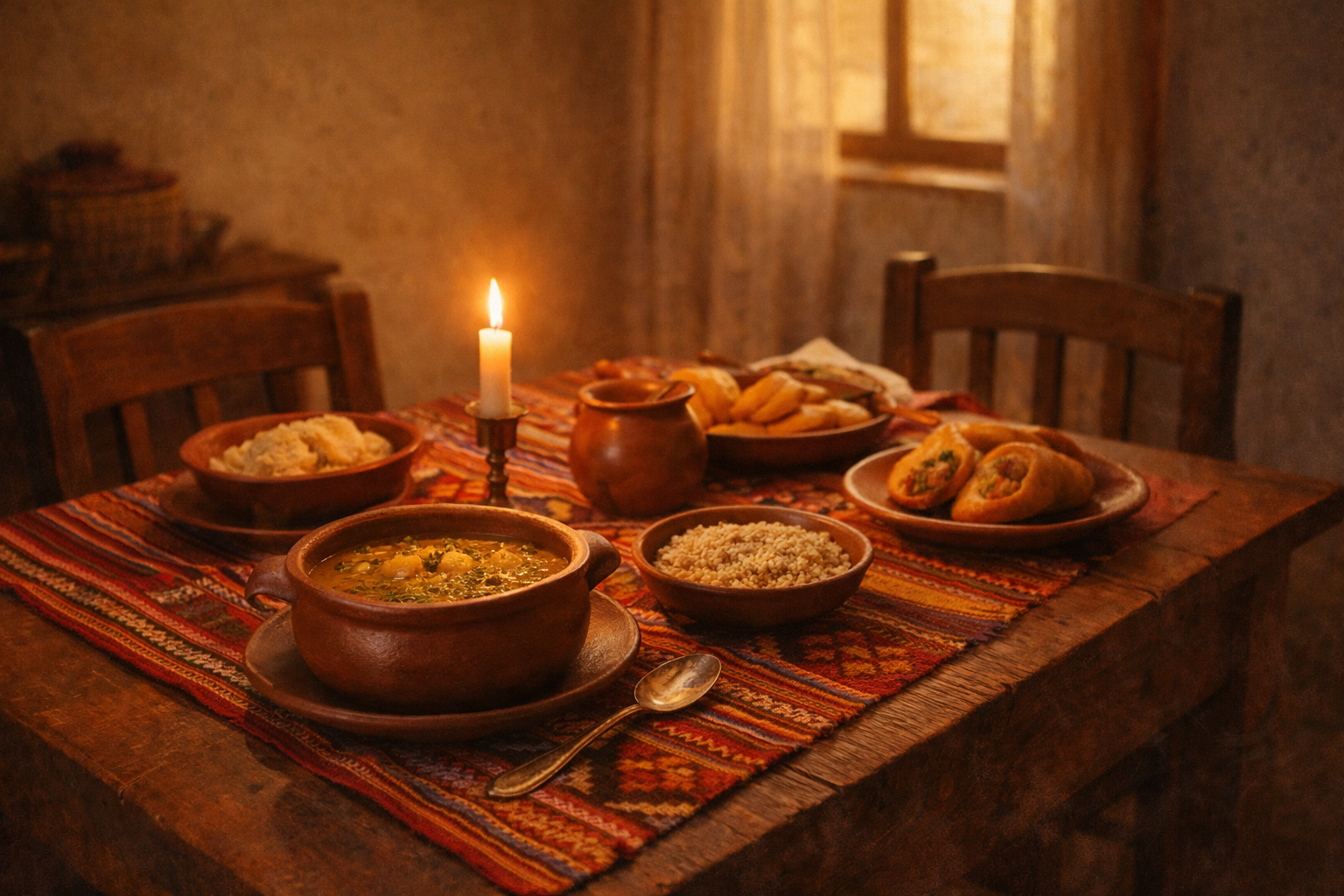
THE GUEST HOUSE
Most people who have spent time in therapy or read anything about emotional wellbeing have encountered some version of Rumi's Guest House. The thirteenth-century Sufi poet wrote that a human being is like a guesthouse — and that every emotion that arrives, however dark or unwelcome, should be greeted at the door. Welcomed in. Given a seat.
It is a beautiful and radical idea. And for many people it is genuinely healing — the permission to stop fighting what arrives, to stop treating their own inner life as an inconvenience or an enemy.
But something in me has always wanted to extend the metaphor a little further.
Because a good host does not simply open the door to everyone and then disappear into the kitchen. A good host is present. Attentive. Aware of who is at the table and what they need. And yes — aware of who has had enough, and who might be better served by a graceful walk to the door.
This is the distinction I find myself returning to in clinical work, again and again: the difference between welcoming an emotion and feeding it. Between acknowledging what arrives and choosing what grows.
THE TABLE IS SET BEFORE YOU SIT DOWN
Before we can talk about what we choose to feed, we have to reckon with something more foundational: we did not set the table ourselves.
Culture sets it first. Family sets it next. And by the time most of us are old enough to make conscious choices about our inner lives, certain emotions have already been given the seat of honor — and others have been told, in ways both explicit and unspoken, that they are not welcome here.
I grew up between cultures, and I have seen this acutely in the communities I work with. In Bolivia, and in much of the Latin world, boys grow up hearing — directly or indirectly — what it means to be un verdadero hombre. A real man. And the menu for a real man does not include sadness. It does not include fear. These emotions are not on the table. They do not have a seat.
And so what happens to a hunger that has no sanctioned food?
It finds another way in.
It arrives through the back door. It wears the costume of something more permissible — something that feels more powerful, more acceptable, more in keeping with who a man is supposed to be. It arrives as anger. As alcohol. As the slow, grinding accumulation of grievance that nobody names and nobody feeds directly, because nobody taught them how.
My mentor, Dr. Alicia Lieberman, said something to me years ago that has never left the room when I am sitting with someone whose anger is filling all the space. She said: look for the benevolence under the anger, and the pain beneath the rage.
That line is not just a clinical technique. It is a way of seeing the guest who came to the table in the wrong clothes — because he did not believe he would be let in any other way. The anger is real. And underneath it, something much more tender has been waiting, hungry, for a very long time.
And also — anger is not always a disguise. Sometimes it is exactly what it is. When a harm has been done — to you, to your family, to your people — anger is the appropriate response. It is the emotion that says: this was wrong. It is the emotion that asks for something to change. In this way, anger is not a defense against more vulnerable emotions. It is information. It is, in its own right, a form of love — for yourself, for what you deserve, for the world as it should be. The question is not whether anger deserves a seat at the table. It does. The question is what we choose to feed it. Because anger fed with action — clear, chosen, values-aligned action — becomes something powerful and purposeful. Anger fed with rumination - with fantasies (or real acts) of violence - becomes something that harms. It seeps into the rooms and relationships where we didn't mean to bring it. Over time, it becomes not a response to injustice, but a way of living. So anger comes in. We give it a seat. We ask it what it needs. And then we decide — deliberately, poco a poco — what kind of food we offer it.
THE SOUP
I want to tell you about a moment in a session that stayed with me.
I was working with someone whose mother had struggled to attune to him emotionally. Not for lack of love — but because emotional attunement was harder for her than the concrete acts of care. She could hold a crying child, but she could not hold the emotions underneath the cry.
But when her son was sick, something shifted. His mother would make soup. Would sit nearby attentively. Would tend to the body with a warmth and presence that didn't require words or emotional translation. The body was something she could care for — clearly, simply, with her hands.
And the son remembered.
Not consciously. Not as a story he told himself. But in his body. Because now, as an adult, when he is sick — he experiences something he can only describe as calm. Almost euphoric. A settling. A sense of being held by something he cannot fully name.
The rest of the time, anxiety lives in his chest. A familiar, chronic tightening. But when he is sick, the anxiety quiets. And in its place — something warm.
We sat with that for a while. And then I said: what if calm and anxiety are both guests at your table? What if you could choose which one to feed?
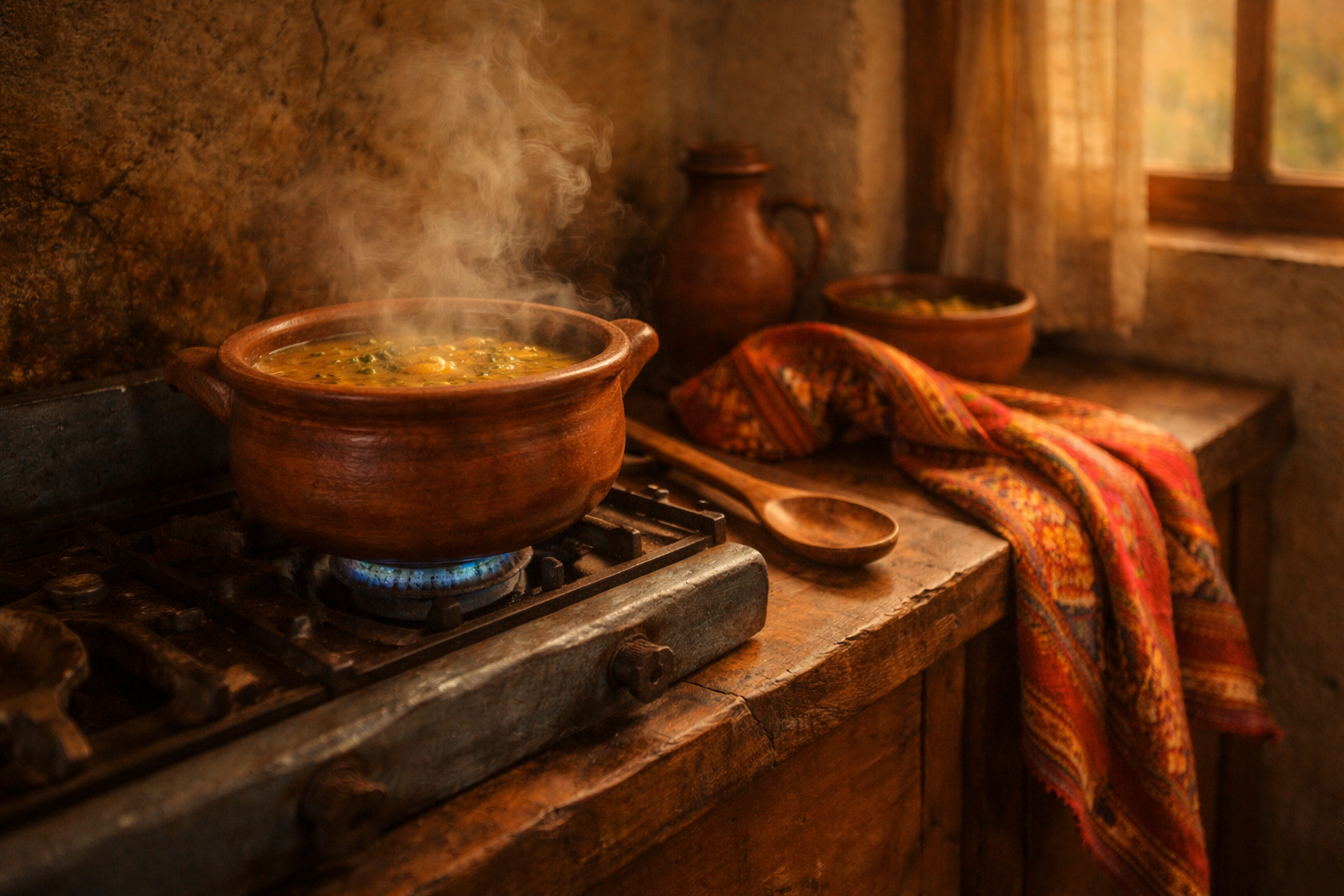
And then: what if you could feed your calm the way your mother fed you — with soup?
His body softened visibly before he said a word. And when he spoke, he said he loved it.
What had happened in that moment was not just a metaphor landing. It was something older and more embodied. The soup his mother made — even in the context of a relationship that couldn't always reach him emotionally — had become a vessel for love. The body held onto it. And now he could offer that same tenderness to his own inner life. He could become, in the moment of care, his own mother. Warm. Present. Gentle. Capable.
WHAT WE CHOOSE TO FEED
This is what I mean when I depart from Rumi — gently, with great respect.
Yes, welcome feelings that arrive. Yes, greet them at the door. Do not pretend they are not there, do not lock the door against them, do not shame yourself for who shows up uninvited.
But then — notice what you are feeding. Because what you feed will grow.
Rumination is feeding. Rehearsing the grievance, replaying the injury, returning again and again to the story of what was done to you with no resolution — that is a form of nourishment. The emotion grows because you are tending it, even if you did not mean to, even if you did not know that is what you were doing.
This is not blame. The table was set before you sat down. You were taught what deserved to be fed. You may have spent years feeding anger because no one taught you that the sadness underneath it was also allowed to eat.
But at some point — slowly, poco a poco — the question becomes available: what do I want to grow?
Not in a forced or effortful way. Not by pushing the difficult guests out before they are ready to leave. But by turning some of your attention — some of your warmth, some of your soup — toward the things you actually want to nourish.
Calm. Steadiness. Curiosity. The part of you that knows something the anxious part does not yet believe.
A Gentle Invitation
Think about the emotions that tend to take up the most space at your table. Not with judgment—with curiosity.
Who taught you that they deserved that space?
What have you been feeding without meaning to?
If the guest in the wrong clothes finally felt safe enough to stop performing, what would you find underneath?
Is there room at your table for joy?
How would you know if it was hungry?
What would you feed it?
And what would it mean to feed your calm a warm bowl of soup?
This piece is intended for informational purposes and is not a substitute for individualized mental health care. Clinical details have been changed or composited to protect confidentiality.
Stay with the conversation
If this piece resonated with you, subscribe to Desert Bloom Reflections for essays on healing and clinical practice, along with updates about upcoming trainings.