
Motivational Interviewing Culture, Attachment, and Intergenerational Healing: Ghosts and Angels in the Nursery
Offered as a 6-hour immersive in-person workshop and a 3-hour virtual training
Next public training date to be announced. Check back for upcoming dates or explore our scheduled trainings.
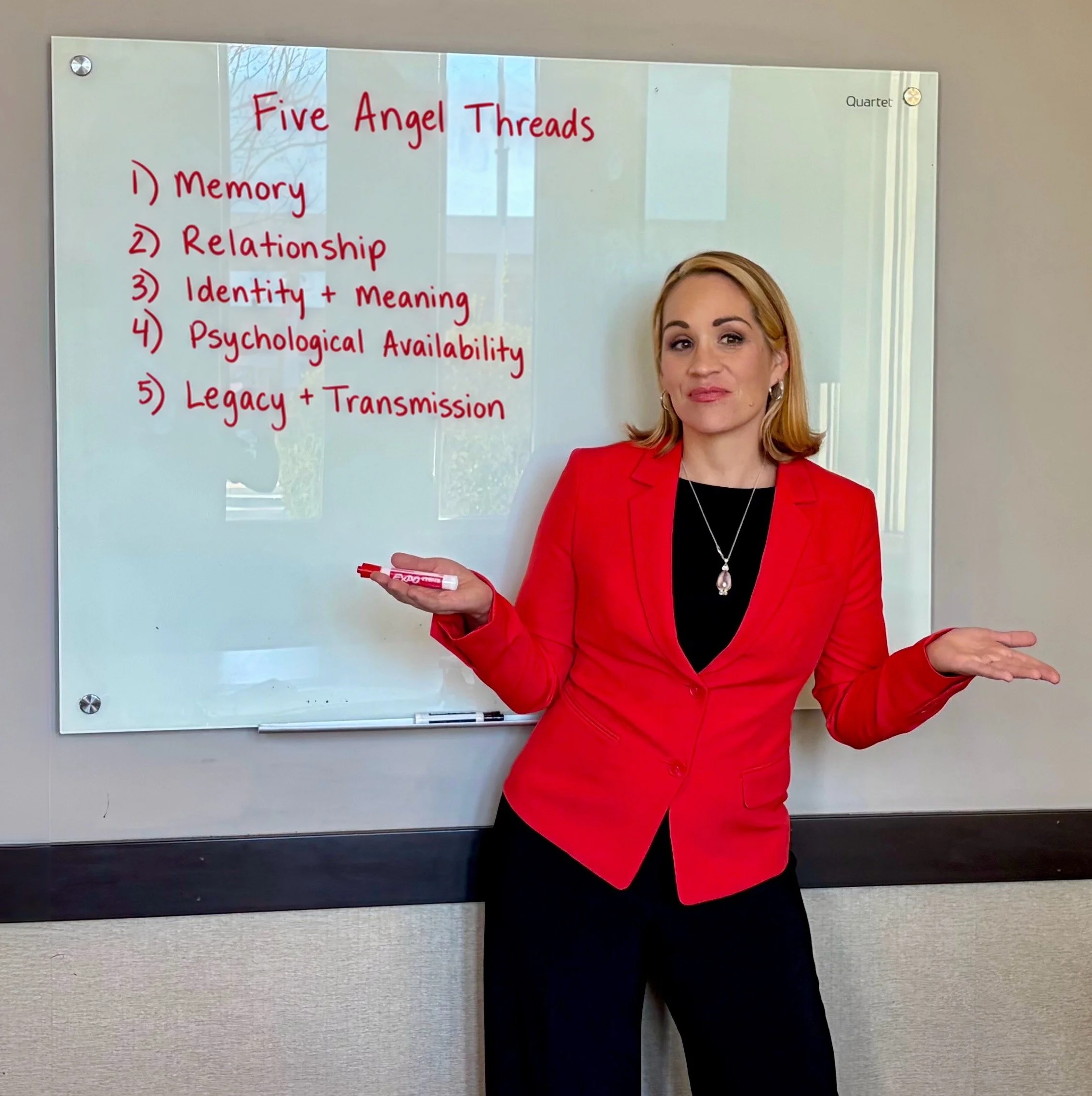
How does the past become present in our relationships — and what helps us interrupt the repetition of pain while drawing on memories of love, safety, protection, and belonging?
This cultural training explores the intersection of Motivational Interviewing, culture, attachment, trauma, and intergenerational healing through the enduring psychodynamic concepts of Ghosts in the Nursery and Angels in the Nursery. Originally developed to understand how unresolved and benevolent early relational experiences can become active in parenting, this training extends the framework to work with adults more broadly — including adults without children — by exploring how relational memories from the past may become activated in present-day relationships, identity, intimacy, conflict, belonging, and change.
Fraiberg and colleagues used the metaphor of “ghosts” to describe the ways unresolved experiences from a parent’s past can become active in the present relationship with a child, sometimes leading to the repetition of earlier relational patterns. Importantly, painful history alone does not determine what will be repeated. Their work draws attention to the emotional experience connected to those memories — and to what can happen when fear, grief, helplessness, shame, or pain become separated from what is consciously remembered.
Lieberman and colleagues later expanded this framework through the concept of “angels in the nursery”: states of mind evoked by memories of having felt especially loved, protected, understood, comforted, accepted, or safe. Building from this work, I will introduce Following the Angel Threads, an original clinical framework and interview I developed for eliciting and deepening benevolent relational memories and exploring what they may teach us about how a person experiences care, safety, belonging, and connection.
We will practice following what becomes visible within it: the memory itself, what happened relationally, what the experience communicated about the self, whether something from that experience remains psychologically available in the present, and how it may travel forward through relationships, caregiving, work, community, culture, and other forms of legacy.
Through recorded interview excerpts, we will consider how these memories are held emotionally, relationally, sensorially, and in the body, including memories that emerge as particular episodes, repeated experiences, sensory fragments, rituals, or ordinary moments of care. We will also consider what happens when Angel memories are difficult to access, when pain and care coexist within the same memory, and when a memory becomes more available over time.
Using the MI Spirit of partnership, acceptance, compassion, and empowerment as a guiding stance, participants will explore how to become curious about these relational memories without deciding what they mean for the client. Through reflective listening, evocative questions, silence, and intentional attention, we will practice having a direction while preserving the client’s authorship of the story: we follow the thread; we don’t weave the story for them.
Mary Main’s work on attachment states of mind and the Adult Attachment Interview provides another important lens throughout the training. We will consider not only what happened in the past, but how relational experience is remembered, organized, communicated, and made psychologically available in the present.
Particular emphasis will be given to how culture, family, migration, language, grief, family loyalty, and histories of colonization shape how memories are held, expressed, interpreted, and revisited. Rather than approaching culture as something we add to a memory afterward, we will listen for how it is already present—in family roles, place, migration, food, language, music, ritual, community, sensory experience, and belonging.
The training will use clinical vignettes drawn from more than 15 years of work with traumatized families, recorded interviews, experiential practice, and familiar characters from literature and cinema to breathe life into theory and deepen reflection.
The training then turns toward the helper’s own internal world. Participants will explore their professional lineage: the supervisors, mentors, teachers, colleagues, clients, communities, and experiences that helped shape who they became as helpers. We will consider what we have received, what became part of us, what we have chosen to transform or leave behind, what sustains us now, and what may travel forward from us into the lives of others.
An ofrenda will offer a culturally rooted space for reflecting on memory, inheritance, professional lineage, and choice—what we honor, what we carry, what we transform, and what we hope to pass forward.
Ultimately, the training invites participants to consider:
What from the past is being enacted or repeated?
How is relational experience organized, remembered, and communicated in the present?
Where are the ghosts — repetitions of unresolved experience that constrain connection and choice?
Where are the Angel memories — experiences of having felt loved, understood, safe, protected, accepted, or like we belonged?
What can these memories teach us about what care actually looks and feels like for this particular person?
What becomes available when we slow down and follow a memory into relationship, identity, meaning, culture, and legacy?
How can we guide attention toward benevolent relational experience without deciding what it means for the client?
What from our own professional histories enters the room with us—and what do we hope others carry forward because they encountered us?
WHAT PARTICIPANTS ARE SAYING
“I highly recommend this training to counselors and other helping and healing professionals. Janeth has a beautiful teaching style, weaving together rich content and research with story and real world examples and vignettes, and participant engagement and practice. You will walk away wanting to immediately apply concepts and tools.”
- Dylan Drusedum, LPCC, ATR-BC, IMH-E
“Janeth's knowledge and expertise was fully displayed during this training. She really demonstrated what it looks like to hold a person while gently guiding, teaching and transforming. I feel like I've been on the precipice of a developmental leap in my practice and this training felt like the catalyst for the next steps in my career as a clinician.”
- Brooklyn Crawford, MS, LMFT
“This training was so impactful for my clinical work and gives a clear, step by step path, to deepening a person's connection to moments of love and safety in their lives through rich detail, attunement, and storytelling - an excellent tool for anyone in the helping professions.”
- Aubrey Bassham, LCSW
