What is CPT and How it Can Help
A therapy that helps people examine the stories trauma taught them — and decide which ones still belong.
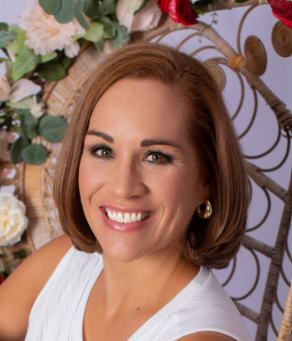
By Janeth Nuñez del Prado, LCSW | Desert Bloom Psychology & Consulting.
The Butterfly that Adapts
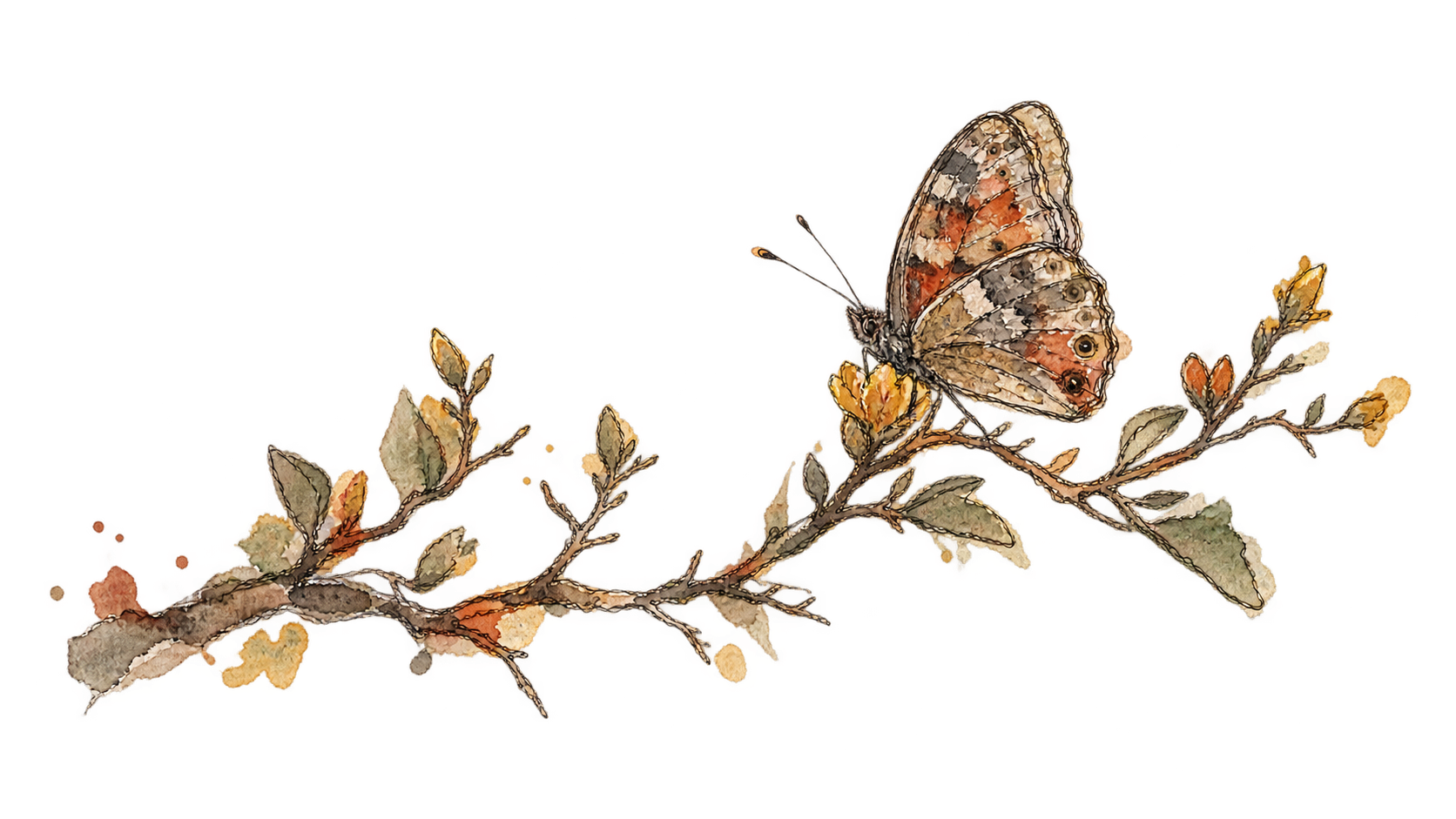
There’s a particular kind of stuck that trauma creates. It demonstrates the wisdom of humans to adapt to even the most difficult environments. Like a butterfly that changed its colors to blend into a harder landscape, to survive what it had to survive. The camouflage worked well at the time and kept you safe.
But at some point, the environment changed. And the butterfly is still hiding — still wearing the colors of a place it no longer lives in.
That’s what I see in clients who’ve been through something that shattered their sense of safety, justice, or self. Their minds have built stories over time that they have come to accept as reality. You may believe: I deserved what happened to me. I can’t trust anyone. It is my job to take care of others. These beliefs were once a protection. They are often older than you and may have been passed down through generations. CPT is the work of asking: does this still serve you? Or is it time to remember what colors were yours to begin with?
What is Cognitive Processing Therapy (CPT) ?
CPT is a structured, 12-session therapy grounded in decades of research. It’s specifically designed for PTSD and is also highly useful for complex PTSD, where the traumatic events may have begun in infancy and impacted the entire sense of self and relationships. CPT addresses the stories we tell ourselves that are based in trauma.
We call those stories stuck points. Beliefs like:
It was my fault.
I should have done something.
If I trust people, I’ll get hurt again.
These beliefs make sense. They were formed in the middle of something terrible, or even a liftetime, often as a way to create order out of chaos. But they calcify. And they start to shape how you see yourself, other people, and the future in ways that are limiting.
CPT works by gently, systematically examining those stuck points to help you look at the evidence with fresh eyes — and develop thoughts that are more balanced, more accurate, less punishing — and more aligned with your values than with your trauma.
And it opens cupboards in your kitchen that you didn’t even know you had. New ingredients. New possibilities. Slowly, you begin to see yourself as the talented cook you always were — someone capable of nourishing yourself, of deciding what gets made in your own kitchen, of setting a table that feels full. While always being able to decide who gets a seat there. CPT is a manualized approach — meaning it follows a structured protocol, session by session. But a recipe is only as good as the cook who makes it. I bring the same presence, the same relational attunement, and the same way of being with people that I bring to all of my work. The structure is the container. What happens inside it is still very much ours.
More often than not, I find that we do not need to complete the entire 12 session structure to see real improvements. Often after some structured time addressing thoughts, beliefs, and behaviors, the work shifts to dealing with everyday situations where we can apply the same skills.
What We Do Together
We start with psychoeducation — understanding what PTSD is, and how the mind and body respond to trauma. Knowledge can be genuinely stabilizing. There is something that eases in people when they realize their reactions have a name, and a reason, and there is hope for recovery.
Then we do the work: together in session, and through written practice assignments between sessions. You’ll examine stuck points, question the beliefs that have been holding you back, and develop new ways of thinking that you actually choose — rather than ones the trauma chose for you.
I want to be honest: part of this process involves turning toward the very thoughts you’ve been working hard to avoid. That can feel uncomfortable. Think of it like two cooks in a kitchen together — if something’s too spicy, we notice it, and we adjust. You are never alone in it, and the pace is always something we tend to together.
By the end, the goal is to develop tools that you can use in many parts of your life, not just trauma processing.
A Note on the Process
This is not passive work. You are an active participant throughout. And in my experience, that's exactly where the healing lives — in something we do together, in the safety of the therapeutic relationship, that you eventually carry forward on your own.
The camouflage was never a flaw. It was a remarkable adaptation to a difficult environment — your nervous system doing exactly what it was designed to do. The body learned to brace, to shrink, to not trust. And it did that work faithfully, for as long as it needed to.
CPT works at the level of thought and belief, but the body keeps the score. As the stuck points begin to shift, something often loosens physically too — the breath that comes a little easier, the shoulders that don't live quite so close to the ears, the deep sleep that starts to return. The mind and body are not separate kitchens. They share the same hearth. My approach combines somatic quieting and a deep attention to body-based healing and reconnecting with intuition.
Being able to do this work in Spanish matters. Many of the people I sit with are bicultural, or Spanish-speaking, or both — and trauma often happens in the language a person grew up speaking, sometimes before there were many words in any language at all. Describing it in English can pull you out of that room. It creates distance from the feeling, from the body, into something that may feel more tolerable but also further away. And something gets lost in that distance. Certain beliefs, certain phrases, only carry their full weight in the language they were born in. Translate them, and they thin out.
Understanding that cultural layer means I'm not quick to call a belief a distortion just because it's not part of the dominant cultural narrative. The question is whether it still fits the life you want to live — and if so, in what form. Some of what you were taught still deserves a place at your table. Some of it belongs in the part of the kitchen you don't cook from anymore — still yours, still safe there, just not something you reach for out of habit.
Slowly, the work of CPT asks whether the environment has changed — and whether there is room now for more of you to be seen.

This piece is intended for informational purposes and is not a substitute for individualized mental health care.
Stay with the conversation
If this piece resonated with you, subscribe to Desert Bloom Reflections for essays on healing and clinical practice, along with updates about upcoming trainings.