Healing from Complex Trauma
A client asked me how to heal from complex trauma. I realized that what I wanted him to know could not be found in any book I could hand him. So I wrote it. This is a letter to him — and to anyone who has begun the courageous journey of healing from early chronic trauma.
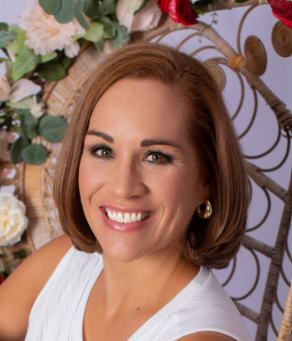
By Janeth Nuñez del Prado, LCSW | Desert Bloom Psychology & Consulting.

The Question
I was sitting with an adult client who had begun the long journey of healing from complex trauma and he asked me: “How do I heal from this?”
I knew there was no shortage of books, articles, and clinical frameworks that attempt to answer that question. But none of them quite said what I wanted him — and the many clients who have asked me this same question — to hear. In language that would reach them. Condensed enough to actually read.
So I decided to write it.
This is a letter to him. And to anyone who has begun the courageous journey of healing from complex trauma.
My Origin Story
Most of what I know about complex trauma I learned on the floor. Literally.
I completed my clinical training at the UCSF Child Trauma Research Program — one of the country’s foremost centers for early childhood trauma and attachment — where sessions happened where children were most free to express themselves, playing with toys on the floor, in the company of their caregivers who carried things that should never have happened. I had the privilege of learning under Dr. Alicia Lieberman, Dr. Patricia Van Horn, and Dr. Chandra Ghosh-Ippen — the developers of Child-Parent Psychotherapy — whose work continues to inform everything I do in the therapy room with adults.
The families I worked with had survived domestic violence, abuse in all its forms, chronic poverty, racism, and the whole range of ways that human suffering takes form. One mother had walked through the Darién Gap carrying her infant on her back.
Sometimes, when people talk about resilience, I think of her.
What that work left me with — above all else — was the awareness of the strength of people’s determination to survive horrible conditions and the abiding belief in the capacity of people to heal. When the conditions for healing are present.
Sessions involved getting on the floor with children and their parents. Because young children do not heal through words. They heal through relationships. Through play. Through the body of another person who is present and safe and willing to get down to their level. My role as their therapist was to nurture the conditions that strengthened the relationship between the parent and the child. I was also at times a witness to what was naturally transpiring, and used words to give it meaning and shine a light on it.
Children express what they cannot say through symbols and games. The dragon attacking the family was not a dragon — it was the overwhelming sense of danger and fear that had not yet found another form to be expressed. The dollhouse shaken by an earthquake was the chronic unpredictability that had characterized their home. And hide-and-seek was never just a game.
It was a question.
If I go away — will you look for me? If you go away — will you come back? Am I safe? Are we safe?
Therapy was a space to answer that question. Again and again, until the child’s body began to believe the answer.
Defining Trauma
Trauma is a word that is simultaneously over-used and under-used.
The diagnosis of PTSD was originally developed to describe one way trauma can manifest, but it was never intended to capture the full impact of chronic childhood adversity. It was built largely on the experience of combat veterans. People who endured sustained and horrific experiences — and were deeply marked by them. But the impact looks different when the battlefield is the home and the war lasts throughout childhood.
That is the difference between PTSD and complex trauma.
A mentor once told me that trauma is like a wave.
The same wave can be an exciting challenge for a skilled surfer — or deadly for a young child who cannot swim. It is not about the wave. It is about your capacity to meet it when it reaches you. The resources you have. Whether you have a parent holding your hand or whether you are navigating it entirely alone.
When you are hit by a single wave — even a large one — you may have time to recover. To find your footing. To catch your breath before the next one comes.
But when the waves come constantly, throughout childhood, before you have learned to swim at all — with no hand to hold, before you have internal resources, language for what is happening, or anyone to help you make sense of it — your life becomes a flood. This flood can feel like drowning when the person meant to keep you afloat is also the storm cloud feeding the ocean. Survival stops being something you do occasionally and becomes the only thing you do. The nervous system reorganizes itself entirely around staying afloat.

Relationships Change How the Body Experiences Stress
The fact that relationships are meaningful is not lost on any of us. We feel it in our daily lives — and we feel the ache when one is absent.
What is less commonly known is that this ache is not a metaphor. Relationships are not just psychologically meaningful. They are biologically protective.
We are born hardwired to connect, and attuned to whether our environment is safe or dangerous. This is wisdom. But the consequence is that babies are incredibly vulnerable to stress and trauma — and to who is there to protect them.
When young children receive vaccines, they show a physiological stress response — the body registering pain and threat. But in the presence of a trusted caregiver, that stress response is significantly reduced. When an attuned parent can hold them, rock them, sing to them, wipe their tears and tell them that everything will be okay — their body stops bracing and starts to soften.
The relationship changes what the body experiences.
Even babies who are asleep show elevated stress responses when exposed to conflict in their home. Before language. Before understanding. The body is already listening — already learning what the world feels like — before the mind has words for any of it.
Edward Tronick’s Still Face experiment showed that even a brief experience of emotional unavailability — a caregiver going flat and unresponsive for just two minutes — produces significant distress in young children. They recover quickly when the caregiver returns. The rupture is not permanent.
But the experiment asks a quiet and devastating question.
What happens when the still face is not an experiment that lasts ten minutes? What happens when it is most of the day, nearly every day? And nearly every day for years?
Safety Develops Before Language
People can intellectually know they are safe and still feel unsafe. This is the body doing exactly what it learned to do.
Much of what we learn about safety and danger occurs before we have words for those experiences. Before we could name what was happening around us, our nervous systems were already organizing themselves around the answer to one question: is this world safe or dangerous? Is this person safe or dangerous? Can I soften here — or do I need to stay ready? And even, devastatingly, the question: “Am I lovable and worthy of protection?”
Complex trauma often develops precisely in this pre-verbal window — when safety was absent, inconsistent, unpredictable, or unavailable. The body learns patterns long before the mind can explain them. And it holds them long after the circumstances that created them have changed.
This is why telling someone to simply stop reacting to the world as if it were dangerous, to stop choosing relationships that confirm what they believe about what they deserve — or reminding them intellectually that they are no longer in danger — is rarely enough. The body needs to learn it. Through experience. Through repetition. Through the slow accumulation of moments in which safety is felt, not just known.
What Child-Parent Psychotherapy Taught Me About Healing
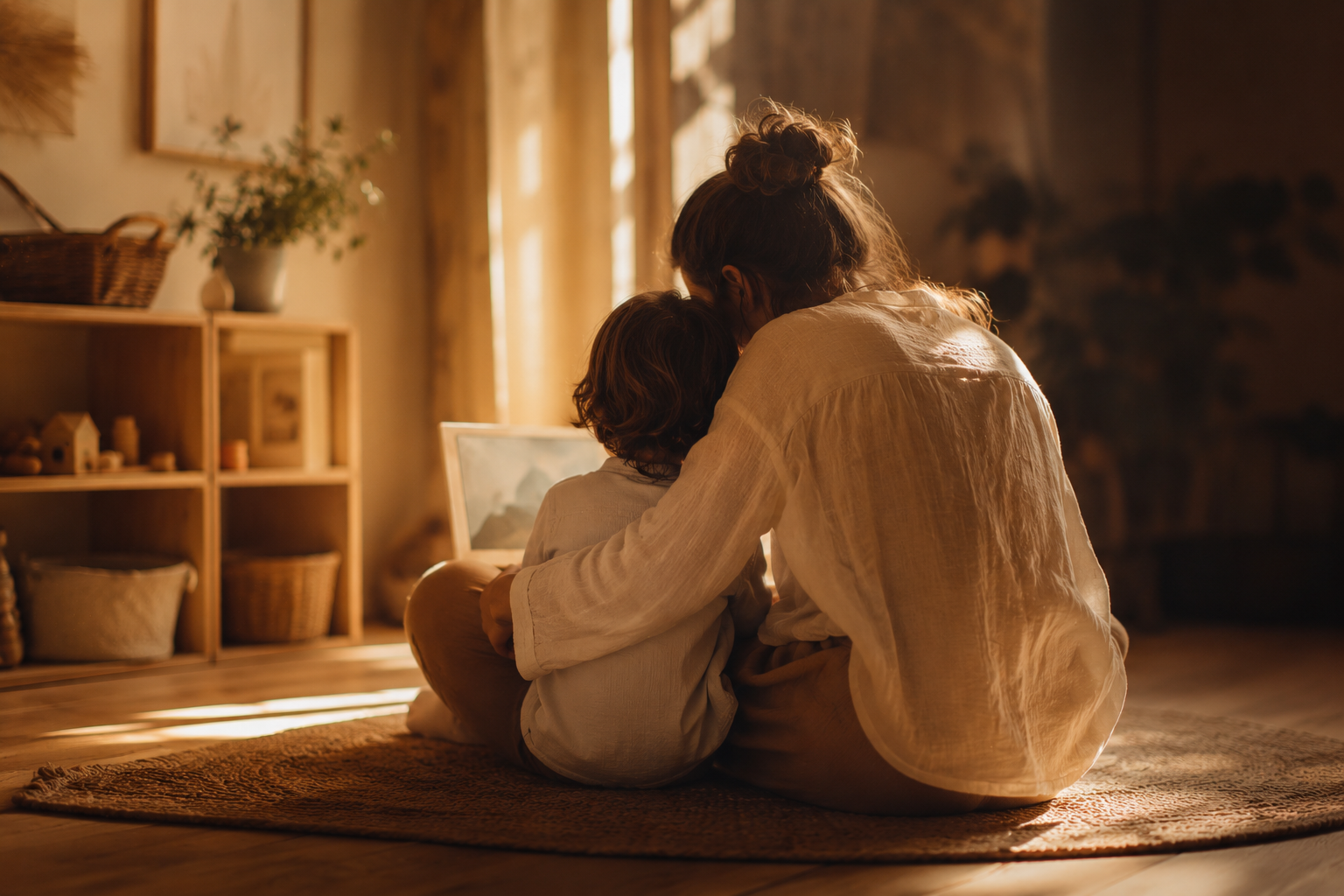
Given that so much of what the body learns about safety and danger develops before we have words for it — and that a caregiver’s presence can buffer that experience — it follows that therapy with a young child would inherently include the parent. And since the language of children is play, therapy looked like playing together on the floor.
We used words a child could understand to name what had happened to them. To let them know they were safe now. That their caregiver was there to help them feel better.
But words were never enough on their own.
Words were offered alongside shared experiences — play rather than explanation. The mother doll would eventually become the superhero who shielded the child from the dragon. The scenes were not always dramatic. Many of the most important moments were small and easy to overlook.
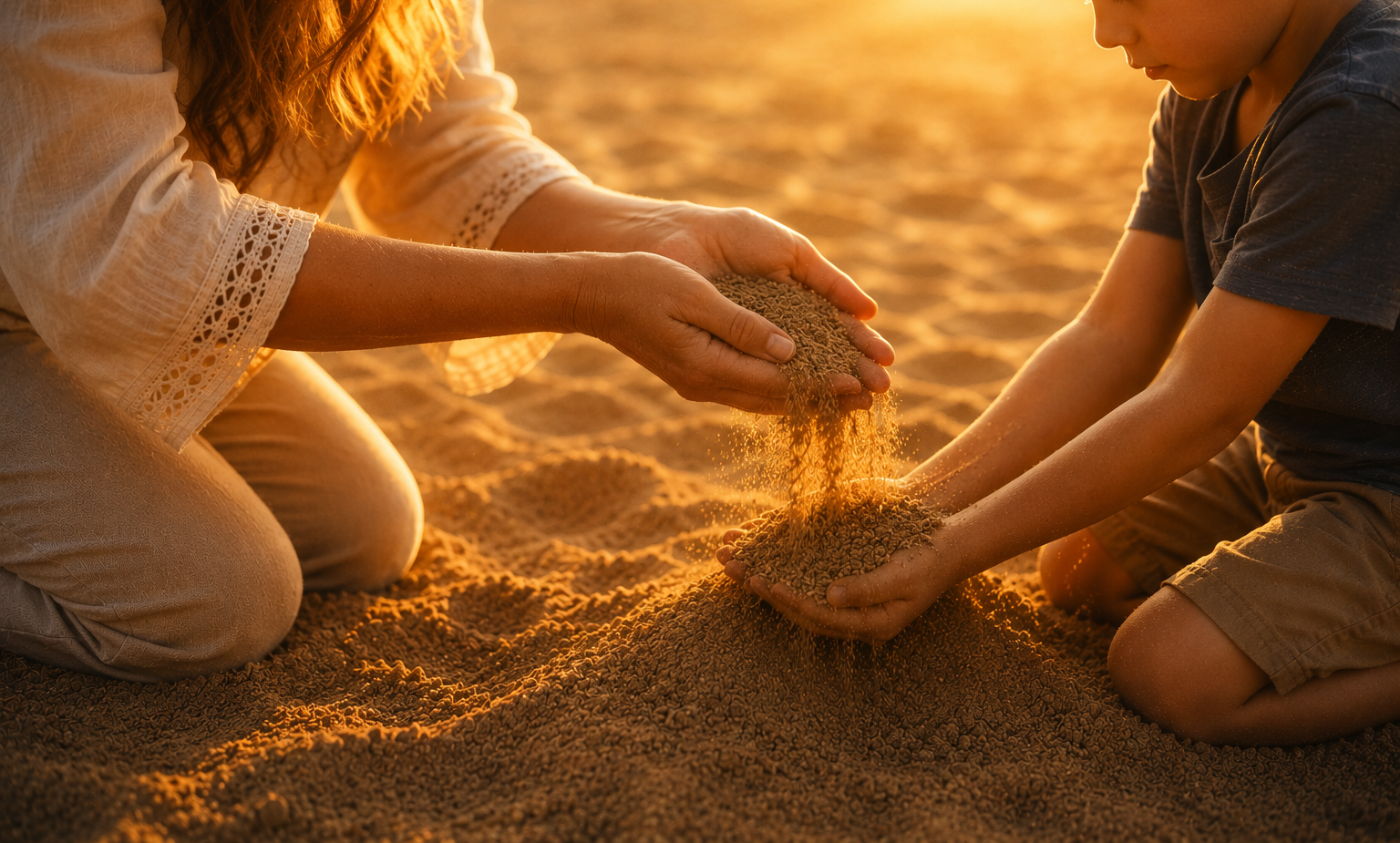
One of them happened in the sand.
I worked with a family I will call Sam and Angela. Sam was three years old and had been adopted at age one, after spending his first year moving between foster homes. We didn’t know much of his story — but we knew it had been characterized by unpredictability and the absence of a consistent, safe person to hold him.
Sam had frequent tantrums, nightmares, and separation anxiety. He did not go to Angela for comfort when he was hurt or frightened. He sat with his emotions in silence, or expressed them through aggression — because his body still believed he was alone. Despite knowing the word, he had never called her Mom.
Angela understood what he had been through. And yet she experienced his distance as rejection. It hurt her — the way it hurts any parent who reaches toward a child and finds nothing reaching back.
One afternoon, Angela and Sam sat in my office playing together in the sand tray. The game was not complicated. They sat in silence, taking turns pouring sand slowly over each other’s hands. Back and forth. Quiet. Unhurried.
Angela looked at me and said: “He really seems to like this game.”
“Yes,” I said. “And it feels like more than a game. Let’s see what he is showing us.”
Sam noticed that Angela had paused. He looked up at her and said:
"Mommy. More."
Tears came to Angela’s eyes. “Ok, Sam. Yes. More.” And she continued to pour.
I said quietly: “Sam — this game with Mommy feels so good. Mommy sees that you like it. And Mommy will give you more.”
What had happened in that moment was bigger than it seemed. Sam had felt something in his body — something soft and safe — and he had realized that it was coming from Angela. From his Mommy. And he had asked for more of it.
Something shifted that day. He called her Mommy from that point forward. Gradually, he began going to Angela when he was sad, when he was hurt, or simply when he wanted a hug for a hug’s sake. His aggression decreased. His nightmares softened into dreams.
He had learned that he was safe. Not because someone told him. Because his body finally believed it.
Among Ghosts and Angels
As one can imagine, the caregivers I worked with carried their own stories. The trauma they experienced was often shared with their child — but more often than not, it began long before their child was born. A lifelong history of multiple traumatic events. Complex trauma of their own.
When I began working with a parent, I would listen for what was remembered and how they felt about it — and also for what was unspoken. What Selma Fraiberg called ghosts in the nursery — the uninvited presence of a parent’s own unresolved pain showing up in the room where their child sleeps. Not intentionally. Not consciously. But there, nonetheless. Shaping how they respond to a cry, how they hold — or do not hold — their baby.
How the past, unnamed and unexamined, moves through a person’s hands into the next generation.
But I would also ask about the angels in the nursery — memories of being deeply understood, accepted, and loved. Moments, however small or fleeting, when a child felt safe in the arms of another person. A grandmother who sang. A neighbor who fed them. A coach who saw in them what they did not yet see in themselves.
One mother I worked with — I will call her Maria — brought her daughter Ana to therapy after a domestic violence incident. Maria had many ghosts. When I asked about her angel memories, she became silent.
She had no memories.
We worked together for months. I watched how Maria’s ghosts showed up in their play — in the way she held back from fully embracing Ana. This time it was the child who reached and found nothing reaching back. And then one December afternoon, something happened that stays with me to this day.
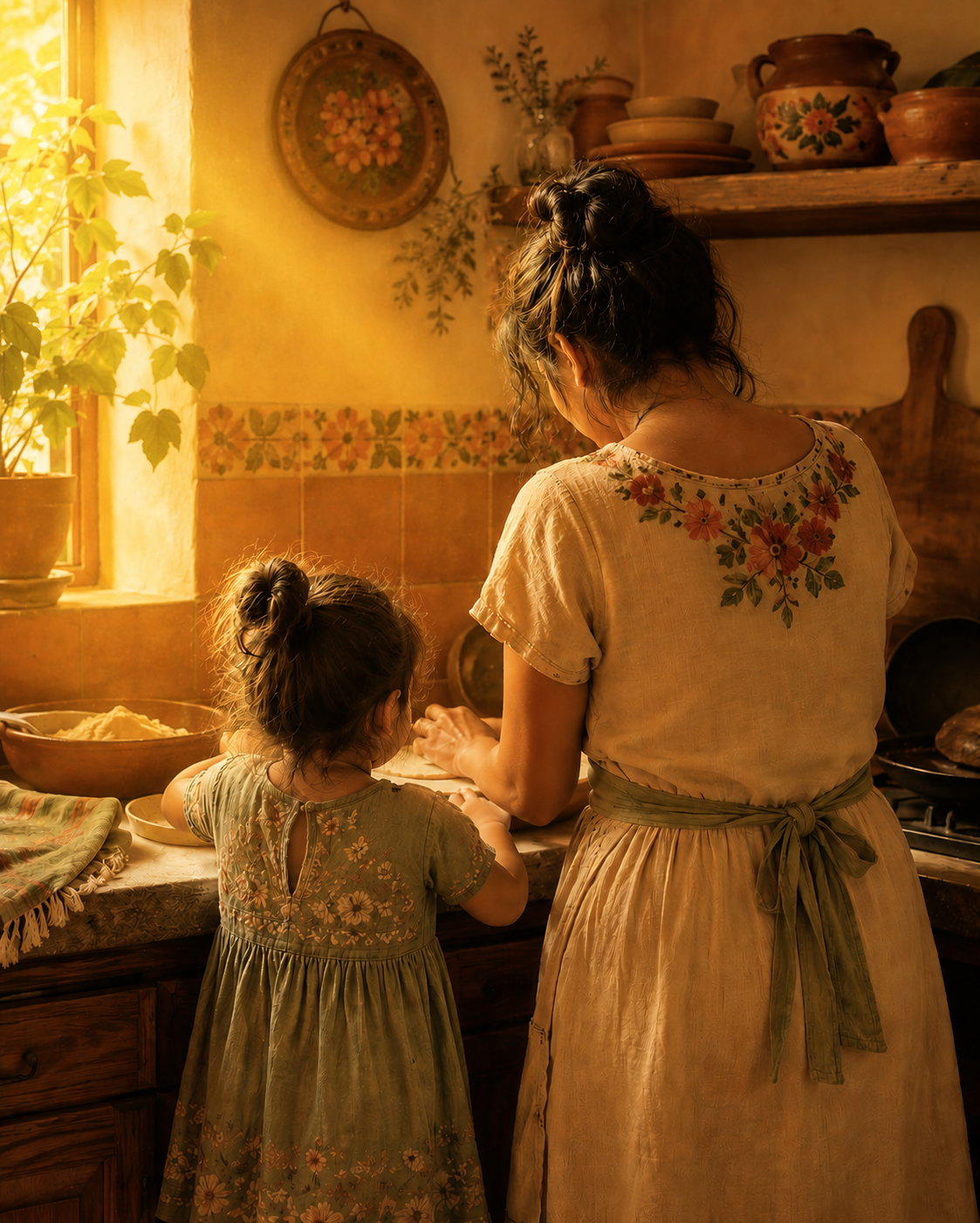
We were sitting at the table together making tortillas out of playdough. Maria typically spoke in English, but in this moment, she paused and started speaking in Spanish. She said:
“Estoy recordando un momento cuando era una niña en México con mi mamá y estábamos haciendo tortillas juntas. Recuerdo cómo se sentía la masa en mis manos, el calor del fogón, el olor de la cocina.”
(I am remembering a time when I was a little girl in Mexico with my mother and we were making tortillas together. I remember what the dough felt like in my hands, the heat from the stove, the smell of the kitchen.)
“Y la sensación de amor,” I reflected back to her.
(And the feeling of love.)
“Sí, eso también. Especialmente eso.”
(Yes, that too. Especially that.)
Maria told me she had grown up with six siblings. There was rarely time for just her and her mother. But on that day, it had been just the two of them in the kitchen. No interruption. No scarcity. Just love.
Maria then said, still in Spanish: “Voy a hacer tortillas con Ana este fin de semana. Quiero que ella también sienta eso.”
(I am going to make tortillas with Ana this weekend. I want her to feel that too.)
What happened in that moment was more than a family tradition being passed down. It was a mother’s angel being transmitted to her daughter — through the body, through the hands, through the smell of something warm. Maria had not been trying to remember her mother’s love. She had been playing with her child.
The angel had always been there. The trauma had simply made it hard to find.
Healing is not only about processing what hurt us. It is also about reconnecting with what held us — however briefly, however long ago. Angel memories are still present even when the trauma has made them feel out of reach.
Sometimes they arrive through playing playdough with our child.
What Does This Have to Do with You?
You may be reading this and thinking: but I am not a child. I am an adult. The sand and the playdough and the hide-and-seek — that was then. This is now.
And yet.
The nervous system that learned to brace in childhood is the same nervous system you are living in today. The body that learned it was alone — that no one would come, that comfort was unavailable, that closeness was dangerous — did not simply update its operating instructions when you turned eighteen. It kept doing what it learned to do. It kept doing what kept you alive.
Adult healing from complex trauma is not fundamentally different from what happened in those therapy rooms with children and their parents. It is slower, perhaps. More mediated by language and narrative and other constraints of adulthood than by sand and playdough. But it moves through the same channels. Safety felt in the body before it is understood by the mind. A relationship that offers something the early ones did not. An angel memory, long sealed, that arrives unbidden — through a smell, a texture, a December afternoon, a reflection from a therapist that lands — and reminds you that you were held, once, even briefly. That love was present, even if it was not consistently felt.
The question is not whether healing is possible for adults who survived early chronic trauma.
It is.
The adult version of the therapy room looks different — the dragons are no longer toys but the ones that live in the mind, in old beliefs about ourselves and the world, in the body’s bracing. The sand tray becomes the bosque, the golf course, the law firm where a lawyer says he is happy to see you — and means it. The hide-and-seek question is still being asked — if I go away will you look for me, if you go away will you come back — but now it is felt in the ache of feeling abandoned when a therapist goes on vacation, and in the slow, careful work of learning to trust that they will always come back.

What Healing Looks Like
People often imagine healing as a breakthrough. A moment of insight. A dramatic release that changes everything.
More often, it looks much smaller than that. It does not announce itself. It arrives quietly, in the middle of an ordinary moment, and you might not recognize it until later — or not at all. It arrives through the repetition of moments of feeling safe, loved, and understood — in relationship with another person — until the body finally begins to believe it.
It looks like surviving a therapist’s vacation and discovering you were held in mind the whole time.
It looks like taking a deep breath without meaning to.
It looks like answering a friend’s text instead of disappearing.
It looks like allowing someone to comfort you when you are hurting.
It looks like remembering something warm from your childhood after years of remembering only the pain.
It looks like a three-year-old looking up from a sandbox and saying, “Mommy. More.”
And discovering that more is given.

A Final Note of Gratitude
This article began with a question from a client.
He asked me simply: “How do I heal from this?”
To the client who inspired this piece: thank you.
Thank you for trusting me with your story. Thank you for your willingness to ask difficult questions and stay curious about the answers. Thank you for allowing me to walk beside you as you continue the courageous work of healing. You continue to teach me about resilience, strength, and what becomes possible when people refuse to give up on themselves.
I am also grateful to the many people whose wisdom, care, and love live beneath these words.
To my ancestors. To my grandmothers and grandfathers. To my parents. To those I have loved and lost along the way, whose presence continues to move through everything I do. To the mentors who shaped me as a clinician and a human being — Alicia Lieberman, Patricia Van Horn, and Chandra Ghosh-Ippen. To the hundreds of children, parents, and adults who have invited me into their lives over the years and trusted me with their stories.
When I think about the idea of angel memories, I realize that I carry many of my own.
To my husband, Max, and to my children, Lily and Rio: thank you for your patience when my own ghosts find their way into the room. Thank you for helping me remember my angels again and again. One of the deepest hopes of my life is that what has been given to me — by family, mentors, clients, and all those who came before us — will continue forward through you, and through the generations that follow.
This work can be difficult. To sit with suffering day after day is to know something about heartbreak. But it is also to witness extraordinary acts of courage, tenderness, repair, and love.
The truth is that I do not carry this work alone.
This article is one small attempt to pass forward some of what has been placed in my hands.
Thank you to everyone who helped place it there.
This piece is intended for informational purposes and is not a substitute for individualized mental health care. Clinical details have been changed or composited to protect confidentiality.
Stay with the conversation
If this piece resonated with you, subscribe to Desert Bloom Reflections for essays on healing and clinical practice, along with updates about upcoming trainings.