
By Janeth Nuñez del Prado, LCSW | Desert Bloom Psychology & Consulting.
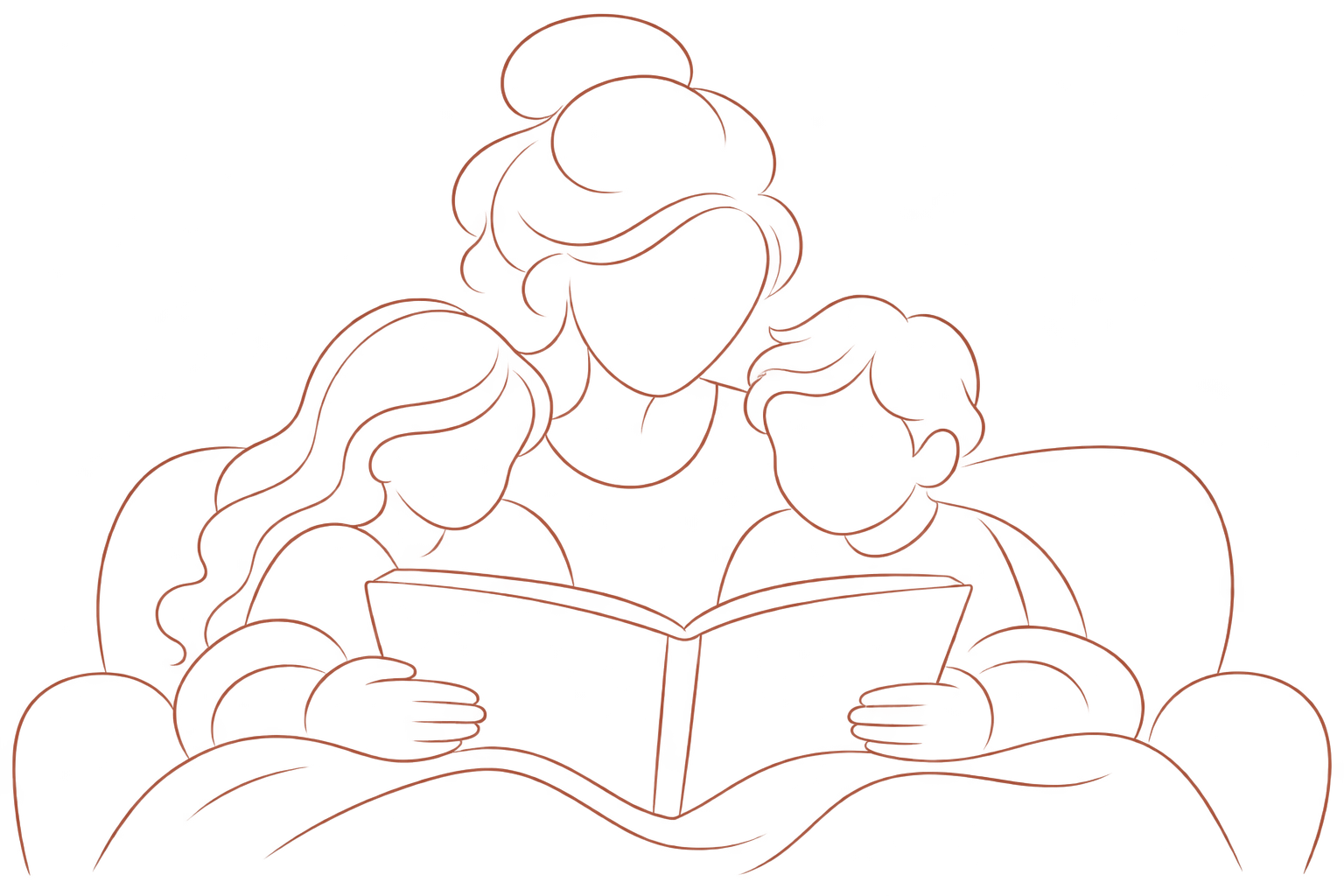
I recently watched Raya and the Last Dragon with my young children, a Disney movie filled with shapeless, formless monsters called the Druun, the loss of entire families and communities, and questions about who in this world can be trusted. As we watched, I wondered whether the movie might be too dark for them, but they loved it and have already asked to watch it again.
It got me thinking about something I've been interested in for a long time: why are children so drawn to stories that touch on some of their deepest fears? Think about how many Disney movies involve children losing their parents or being separated from them. In Bambi, a young deer loses his mother when she is shot by a hunter; in The Lion King, Simba discovers his father's body and is made to believe he is responsible for his death; and in Finding Nemo, a little fish is separated from his only surviving parent after his mother and siblings have been killed by a predator who is very much still out there in the ocean. These are frightening scenarios, particularly for young children whose sense of safety is so closely tied to the presence and protection of their caregivers.
I've come to think about children's fascination with these stories in much the same way that I think about adults who enjoy roller coasters or horror movies. There is something about experiencing fear in circumstances where we have some control over it that can make the experience enjoyable, or even helpful. A child watching The Lion King may experience the fear and sadness of losing a parent while cuddling next to their own parent on the couch, under a blanket, and with the lights dim (but not off). And the movie doesn't leave the child immersed in those feelings continuously. There are musical interludes, humor, and opportunities to move between moments of fear and moments of relief, which can help make the experience more manageable. This is not to say that every frightening story is right for every child, or that a child needs to keep watching something that feels overwhelming.
I find it particularly striking that shortly after the devastating aftermath of Mufasa's death, Simba encounters two of the movie's most humorous characters, Timon and Pumbaa, who introduce him to Hakuna Matata. The contrast between the grief and terror of losing a parent and the lightheartedness of these scenes is remarkable—and emotionally regulating. After witnessing some of the worst of what the world can offer, children are brought back into the light through the beauty of nature, humor, music, and the warmth of new relationships.
Developmentally Normative Fears
This brings me to the work of Alicia Lieberman, whom I had the privilege of studying under at UCSF. Lieberman has written extensively about the fears that emerge as part of normal childhood development. As children grow, they become increasingly aware of and afraid of separation and loss, the possibility of losing parental love or approval, damage to their bodies, and being “bad” in ways that might lead to rejection. These fears are developmentally normative. They are part of what it means to become increasingly aware of ourselves, our relationships, and the world around us. These fears are present in all of us, but trauma can intensify them to the point that they interfere with healthy development.
This is where protective relationships become so important. The question is what happens when that fear emerges. Does someone respond with sensitivity and warmth? Is there someone who helps the child feel safe, accepted, and understood? Through repeated experiences of care and protection, children begin to develop expectations about themselves and their relationships: I matter. I am worthy of love. When I am frightened, I don't have to face it alone. I think of the ritual, present in so many cultures, of kissing a child's boo-boo to make it better, or sana, sana, a gentle Spanish-language rhyme spoken to soothe a young child who has been hurt. The kiss or the rhyme doesn't necessarily take away the pain, but it communicates something important: I see that you're hurting, I'm here with you, and you're not alone.
The “Broken” Banana
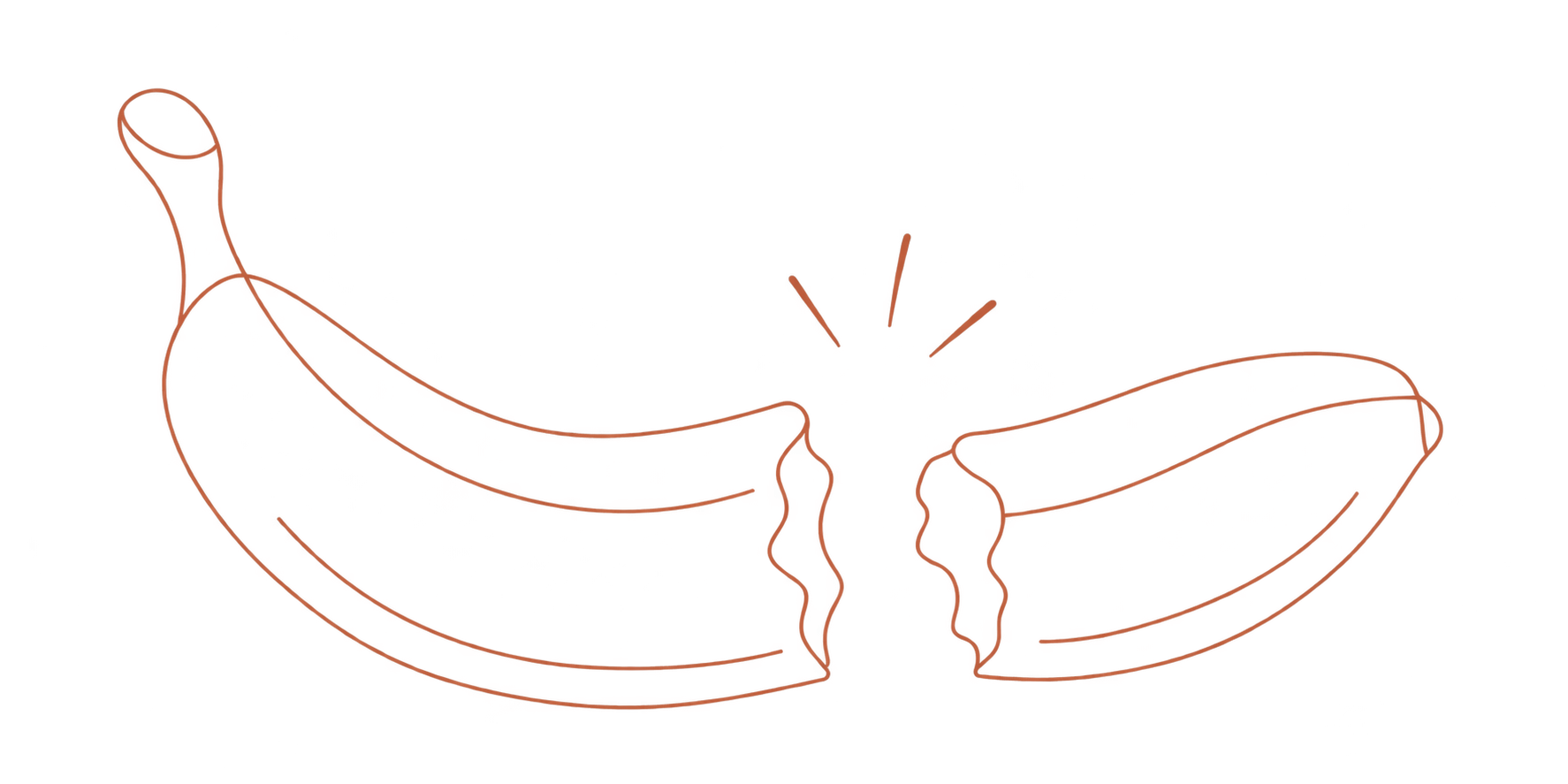
I remember when my daughter was a toddler and had a meltdown because her banana had “broken,” as she called it. At first, I was puzzled and chalked it up to one of those seemingly irrational toddler moments, but something about her distress felt deeper. I leaned down and gently said to her, “Your banana broke, but you will not break,” and wiped away her tears. She took a deep sigh and went about her day. This is one example of what it can look like when a child's distress is met with curiosity, reassurance, and care, in a very ordinary moment.
Our Lifelong Companions
And here's something I find fascinating: once these fears come online developmentally, they don't simply disappear. In many ways, they become our lifelong companions. As adults, we may have more sophisticated ways of understanding and managing them, but we still fear abandonment, rejection, losing the people we love, and our own mortality - and in times of stress these fears are even more present. Perhaps this helps explain why adults, too, are so drawn to Disney movies! These stories speak to fears that emerged in childhood but remain present throughout our lives.
Psychoanalyst Bruno Bettelheim explored something similar in his 1976 book The Uses of Enchantment. He argued that fairy tales offer children a symbolic language for grappling with difficult emotions and existential fears. Stories about abandonment, death, jealousy, cruelty, and danger allow children to encounter frightening possibilities within the imaginative world of a story. Bettelheim believed that fairy tales could help children make sense of internal conflicts that they might not yet have the language to articulate. Although aspects of his psychoanalytic interpretations have been challenged, his central idea remains compelling: frightening stories are much more than mere pastimes. They can provide a way to explore some of our deepest human fears through the safety of images, symbols, and psychological distance.
Metaphor, Symbol & Storytelling
This is the gift of metaphors, symbols, and storytelling. In Raya and the Last Dragon, the once-united land of Kumandra has been fractured into rival kingdoms, while the Druun turn people to stone, a powerful image of fear, division, and the destruction of relationships and communities. Raya's journey follows the familiar archetype of the hero, who must leave home, encounter danger and betrayal, and ultimately confront her own fears about trusting others. But Raya's story also bends the classic hero's arc: her victory isn't a solitary triumph but an act of collective trust. Not every culture's stories of transformation center the lone hero, and Raya reminds us that healing and restoration can emerge through relationships, shared responsibility, and community.
The dragon gem itself becomes a striking symbol: its scattered pieces reflect the fragmentation of Kumandra, while bringing them together represents the possibility of restoring what has been broken.
Metaphors help us organize complex experiences into images and stories that we can more easily understand and remember. They create emotional distance without disconnecting us from the feelings themselves, allowing us to engage with psychological material that might otherwise feel overwhelming. They also allow multiple meanings to exist simultaneously, rather than requiring us to settle on a single interpretation.
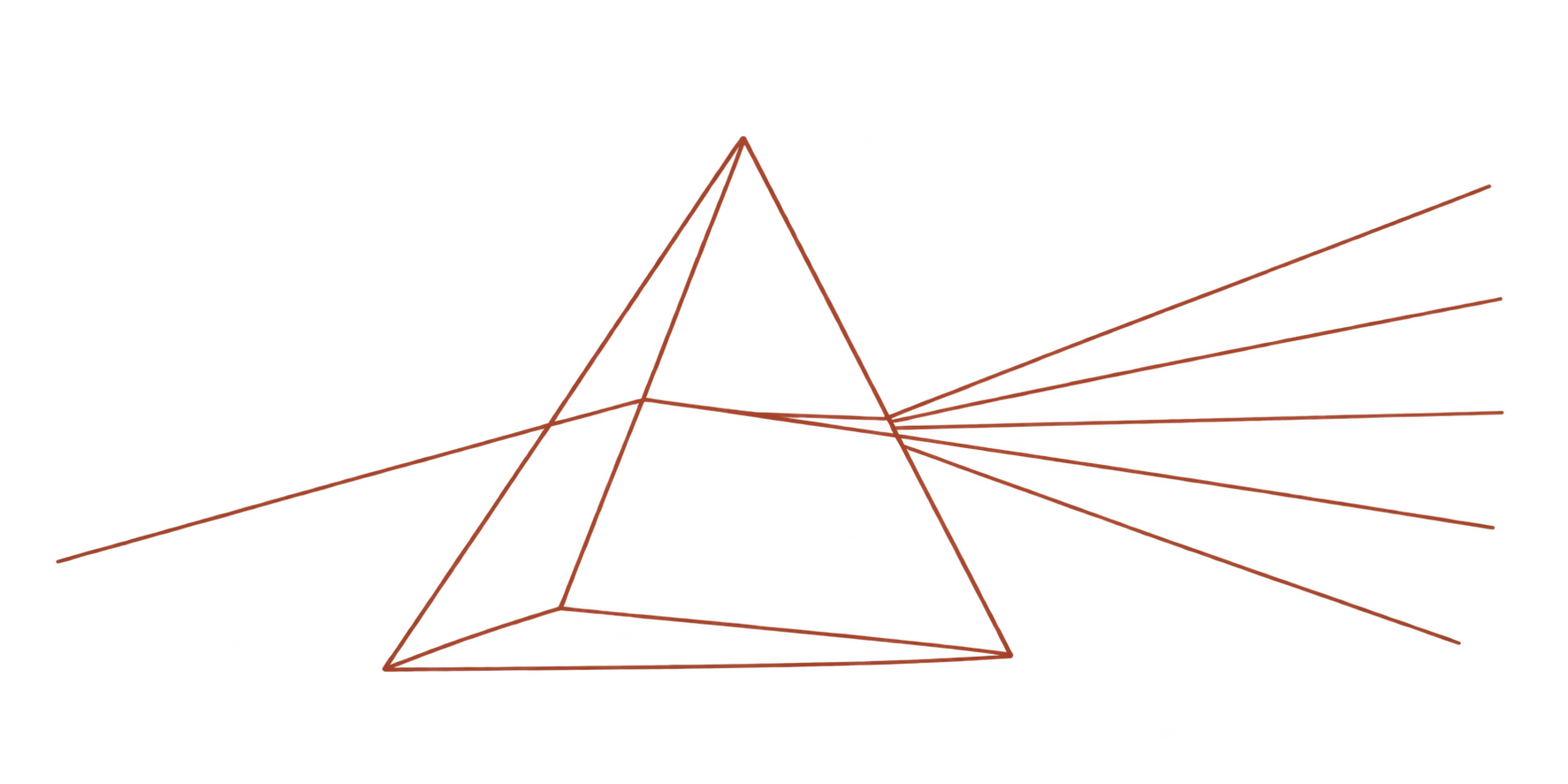
I like to think of a metaphor as a prism. Just as a prism refracts light into different colors, metaphors allow us to see different dimensions of an experience that might otherwise remain hidden. Depending on how we look at it, the same image or story may reveal something different, with its meaning shaped by our culture, developmental stage, and attachment history. This raises an important question for therapists and healers: Whose meaning matters most and whose should be centered? The same curiosity I bring to my children’s encounters with stories also shapes how I listen in the therapy room.
We hear stories every day. Our clients naturally think and communicate metaphorically, especially during times of stress and overwhelm, often using images and stories to describe experiences that are difficult to put into words. They are constantly making meaning of their lives. They may not call these stories myths, but they use them to grapple with the same timeless questions:
Who am I? What happened to me? What does it mean? Where do I go from here? Will I be safe? Will the people I love stay with me? Am I worthy of love, even when I make mistakes? What happens when I lose someone I love?
The stories we tell as we grapple with these questions shape how we understand ourselves, our relationships, and what we believe is possible for our futures.
A client once wondered where the journey of life would take her. As we explored that image together, it became a shared language that helped shape the next phase of our work. These moments invite us to consider what might unfold when we give a familiar metaphor a little more room. What possibilities might emerge if we pause, become curious, and invite the person to tell us more?
Where to Go From Here
How we enter our clients' stories, how we listen for the metaphors and symbols they offer, and how we explore their meanings without imposing our own interpretations are at the heart of what I'll be exploring in my upcoming training, Metaphor, Myth, Story, and Meaning-Making in Clinical Practice, on December 4. Drawing on the spirit and skills of Motivational Interviewing, we'll explore how to recognize, reflect, and deepen the metaphors our clients bring, while remaining curious about the personal, cultural, and relational meanings they hold.
I hope you’ll join me for this interactive virtual training on Friday, December 4, from 9:00 a.m. to 12:15 p.m. MT where we’ll have opportunities to reflect, practice, and learn from one another.
Approved for 3 Cultural CEUs · Limited to 25 Participants ·
Register: desertbloompsych.com/trainings

This piece is intended for informational purposes and is not a substitute for individualized mental health care. Clients have been de-identified to protect confidentiality.
Stay with the conversation
If this piece resonated with you, subscribe to Desert Bloom Reflections for essays on healing and clinical practice, along with updates about upcoming trainings.