The Ties They Called Weak
Sociologists call them weak ties. They are wrong about the name. On the gym friend, the barista who knows your order, and the small moments of human connection that tether us back to ourselves.
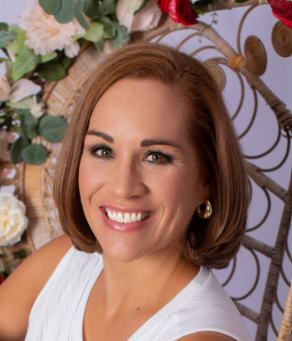
By Janeth Nuñez del Prado, LCSW | Desert Bloom Psychology & Consulting.

ROB
This morning I woke up carrying a little heaviness. The kind that doesn't always have a clean explanation — just the weight of hard things that life has held lately.
I brought myself to the gym anyway.
When I walked in later than usual, my gym friend Rob looked at me and said: "Excuse me, miss… we start workouts at 6am here."
It completely changed my mood.
Sociologists call these relationships weak ties. The gym friend. The neighbor you wave to every morning. The barista who always remembers your drink order. They are distinguished from our strong ties — the deep relationships with family and close friends — by their lower frequency and emotional intensity.
Weak ties. As though they were the lesser thing.
They are wrong about the name.
WHAT THE RESEARCH FOUND
Sociologist Mark Granovetter first described weak ties in 1973, studying how people find jobs. He found, counterintuitively, that our weak ties are often more useful than our strong ones for accessing new information and opportunity — precisely because they connect us to worlds outside our immediate circle.
But what the research has been slower to name is what weak ties do for the nervous system.
Rob didn’t know I was carrying anything. He didn’t sit with me and ask how I was doing. He just saw me — and in seeing me, made a joke that said: you belong here, we’ve been expecting you, this is a place where you are known.
That is not a weak tie. That is a thread in the fabric that keeps us from unraveling.
WHAT HAPPENS WHEN THEY ARE GONE
Psychological research on loneliness has found something important: the absence of weak ties produces a specific kind of ambient disconnection that deep relationships cannot fully address. We had a collective experiment in this during the pandemic. The strong ties held — we called our families, we texted our closest friends. And yet something felt profoundly thin.
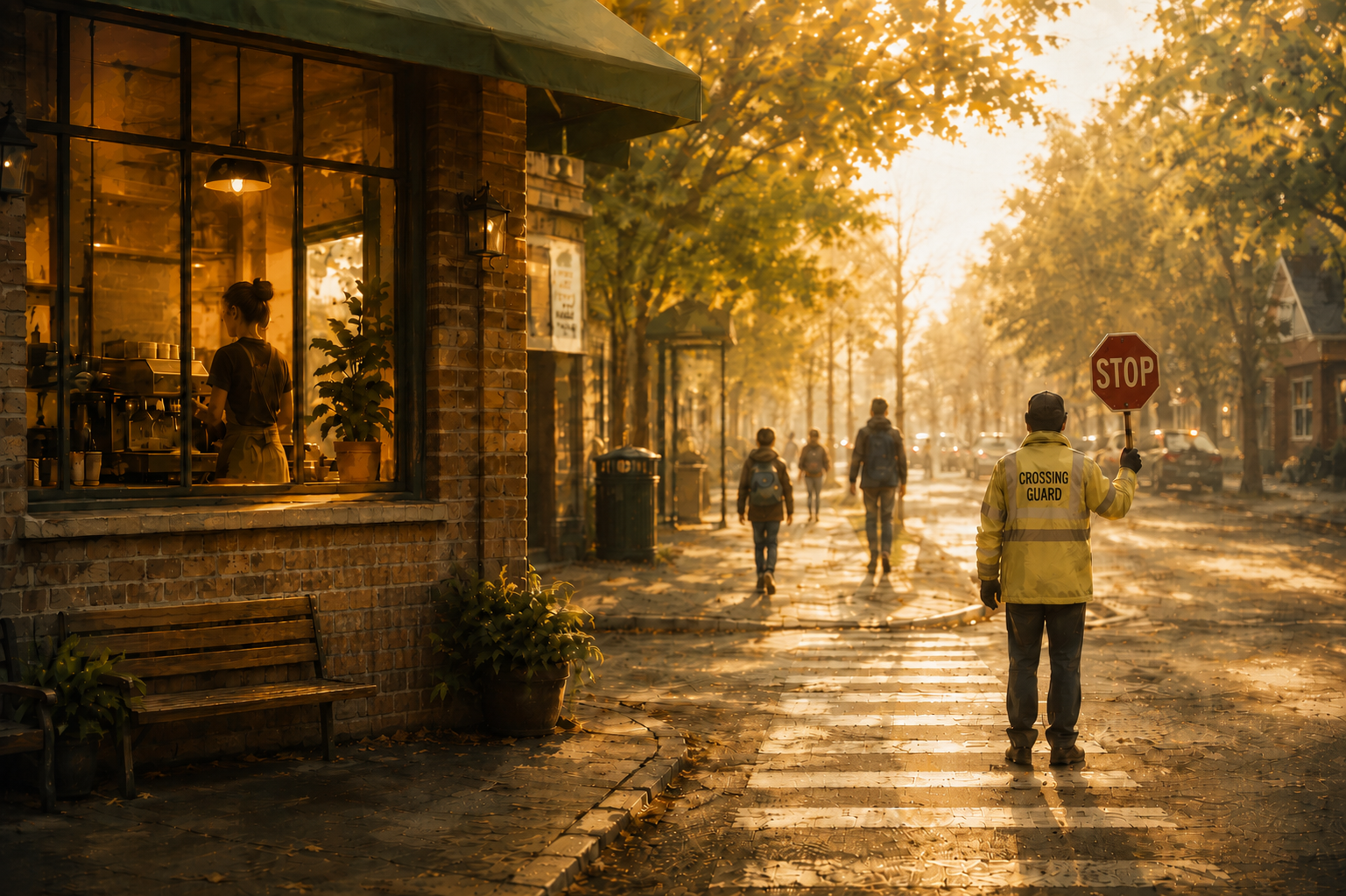
The cashier who asks how your day is going. The crossing guard who keeps the children safe. The gym friend who notices when you’re late. We lost all of it at once — and many of us couldn’t quite name what was missing, only that the world had become slightly less real.
What was missing was Rob.
The texture of feeling connected to the world — to your neighborhood, your community, your ordinary daily life — is woven from hundreds of small interactions that each, individually, seem inconsequential. Together, they are the connective tissue of a life.
When we lose them — through a move, a pandemic, a period of isolation, a depression that keeps us inside — we often can’t name exactly what is missing. The strong ties are still there. And yet something feels thin. Like the world has become slightly less textured.
Sometimes healing looks like small moments of human connection that tether you back to yourself.
IF YOU HAVE A ROB
So if you have a Rob in your life — notice them. Let yourself be tethered. Receive the small joke, the wave, the remembered name, the drink that’s already being made.
And if you have been someone’s Rob without knowing it — thank you. You have been doing more than you know.
A GENTLE INVITATION
If you are in a period where the weak ties have thinned — where the fabric of ordinary connection feels sparse — that is worth paying attention to. It is not a small thing. It is one of the quiet ways isolation takes hold before we have named it.
If the fabric of connection has felt thin lately, you don’t have to navigate that alone.
This piece is intended for informational purposes and is not a substitute for individualized mental health care.
Stay with the conversation
If this piece resonated with you, subscribe to Desert Bloom Reflections for essays on healing and clinical practice, along with updates about upcoming trainings.