
The Warmth They Will Remember
By Janeth Nuñez del Prado, LCSW | Desert Bloom Psychology & Consulting.
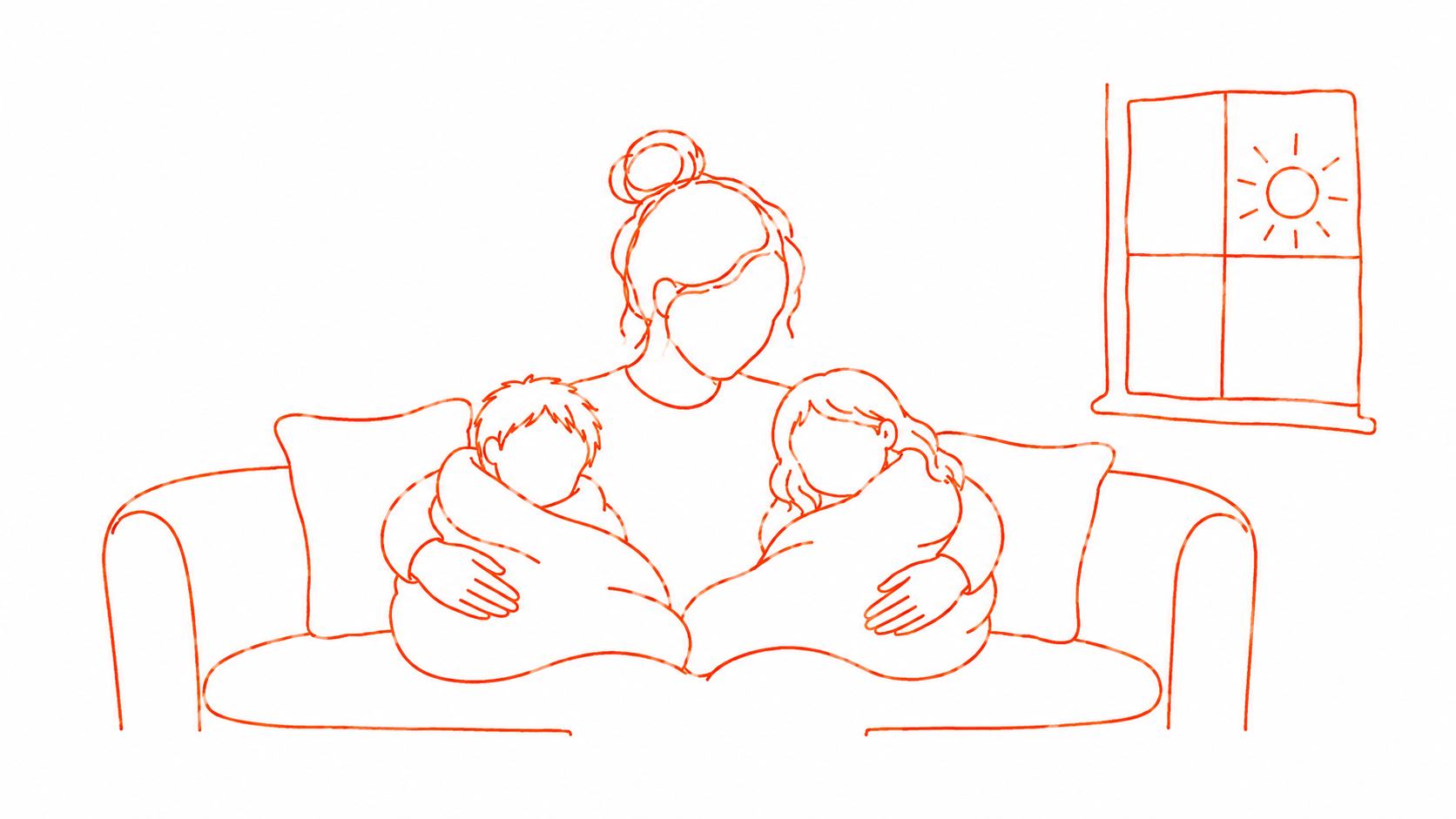
Like a Blanket
I am always hot. Ever since having children, I just run warm.
My children are naturally cuddly. Ever since my nine-year-old daughter was little, she has climbed into bed and snuggled against me. She has often said:
“Mom, you’re always so warm.”
Recently, she gave me an even more specific description:
“You feel like a blanket that just came out of the dryer.”
And a couple of weeks ago, on a morning when I was feeling less generous toward my own body, my six-year-old son crawled up beside me to snuggle and said:
“Mom, you’re so strong and muscly and warm—and some of your muscles are really squishy and soft.”
Ghosts and Angels Among Us
There is a concept in the world of early childhood that has never left me since I first encountered it.
Selma Fraiberg, a child psychoanalyst and social worker whose work continues to shape trauma-informed practice, described what she called Ghosts in the Nursery. They are the uninvited presence of a parent’s own unresolved pain showing up in the room where their child sleeps. Not intentionally. Not consciously. But there, nonetheless. Shaping how they respond to a cry. How they hold—or do not hold—their baby. How the past, unnamed and unexamined, moves through a person’s hands into the next generation.
It is a haunting idea. And one most people can recognize as true.
But during my training at the UCSF Child Trauma Research Program, I was introduced to its counterpart—and it is the one that has sustained me in this work.
Alicia Lieberman and her colleagues described what they called Angels in the Nursery: experiences of intense connection in which a child felt almost perfectly understood, accepted, or protected.
These experiences do more than leave behind a happy memory. They help form a core sense of worth and security. As Lieberman and her colleagues wrote:
“These messages of intrinsic goodness and unconditional love constitute the essence of the angel.”
Angel memories carry a message the child may continue to live from: I am good. I am lovable. I am safe with someone.
Not perfect childhoods and certainly not perfect parents. Specific moments of being known, protected, delighted in, or gathered close.
And these memories are often body-centered. They may be formed before a child has words—in warmth, smell, rhythm, touch, and the feeling of resting against someone whose presence meant safety. Lieberman and her colleagues emphasize that these preverbal and nonverbal experiences can contribute to an enduring sense of well-being.
What We Learn to Notice
Once I learned to look for angel memories, I couldn't stop noticing them.
I noticed them in therapy — in the moment a client remembered an auntie brushing her hair, the smell of tortillas in a neighbor's kitchen, a carpenter recounting sitting next to his father and making a birdhouse.
I noticed them in conversations with friends.
And, gracias a dios, I noticed them with my children.
Angel memories are not always remembered first as stories. Often they arrive as something the body knows before the mind does.
Warmth.
Smell.
Texture.
Rhythm.
Voice.
The feeling of resting against someone whose body felt like safety itself.
Because I carry this framework, I hear my children's words differently. I don’t brush them aside as sweet things children say. I let them land. I allowed myself to fully receive them - which is its own kind of practice, for those of us more accustomed to seeing others than being seen ourselves.
Years from now, when my children think of me, one of the first things they might remember is:
My mom was always warm.
Since learning this framework, I find myself lingering a little longer in ordinary moments.
Because I know that the smallest moments sometimes leave the deepest traces.
Perhaps one of the gifts of carrying this framework is that it helps us become witnesses to angel moments while they are still being formed—not only in our clients' lives, but in our own.
🌿 Curious to learn more?
If you've ever wondered how therapists can help people rediscover these moments—or recognize them while they're happening—I'll be exploring that question in my upcoming workshop, Motivational Interviewing and the Ethics of Behavior Change.
We'll explore what happens when we learn to listen not only for pain, but also for the quiet experiences of protection, connection, and meaning that are often hiding in plain sight.
I'd love to have you join us.
Approved for 6 Ethics CEUs · Limited to 25 Participants · $200 + GRT
Register: desertbloompsych.com/trainings

This piece is intended for informational purposes and is not a substitute for individualized mental health care. Clients have been de-identified to protect confidentiality.
Stay with the conversation
If this piece resonated with you, subscribe to Desert Bloom Reflections for essays on healing and clinical practice, along with updates about upcoming trainings.